1 / 23

The city
My city

Let me show you my city: what the city keeps for itself, what you may open, and what happens underneath.
1 / 23
 the space city

How Heliopoly works · one section, step by step
What it keeps, what you may open, and what happens underneath. Let me take you through it, one step at a time.
This section
One step for each page of this section. Each step links to its full page.
Opens large and plays by itself, with the Mayor's voice: about 11 minutes. You can pause it or go at your own pace.
The city
Let me show you my city: what the city keeps for itself, what you may open, and what happens underneath.
The city · 1 of 7
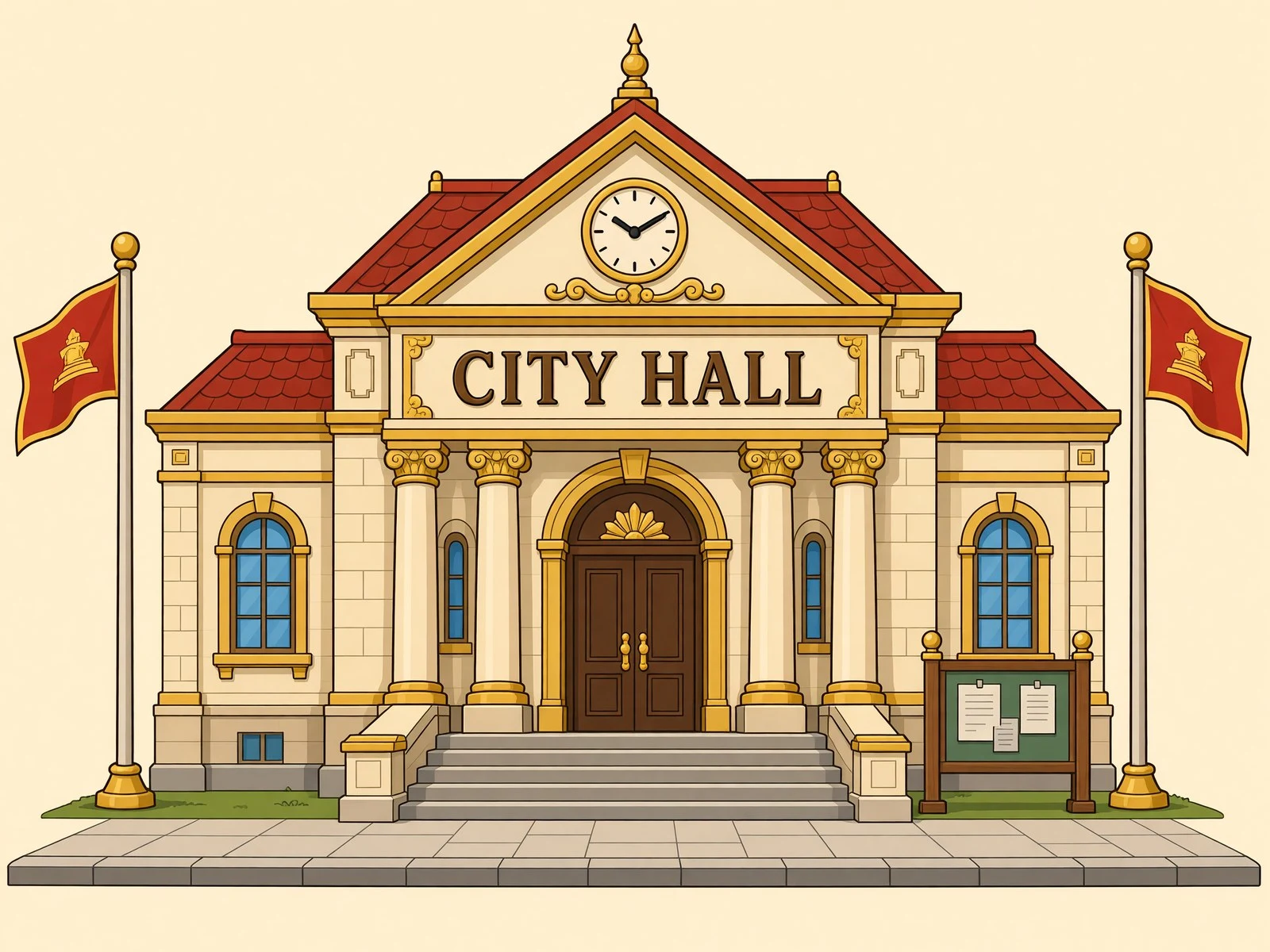
One of each institution, and only one. Where yours stands is a fact about where you chose to live.
In short: The city owns one of each important building, like City Hall and the hospital.
The city · 1 of 7 · in depth
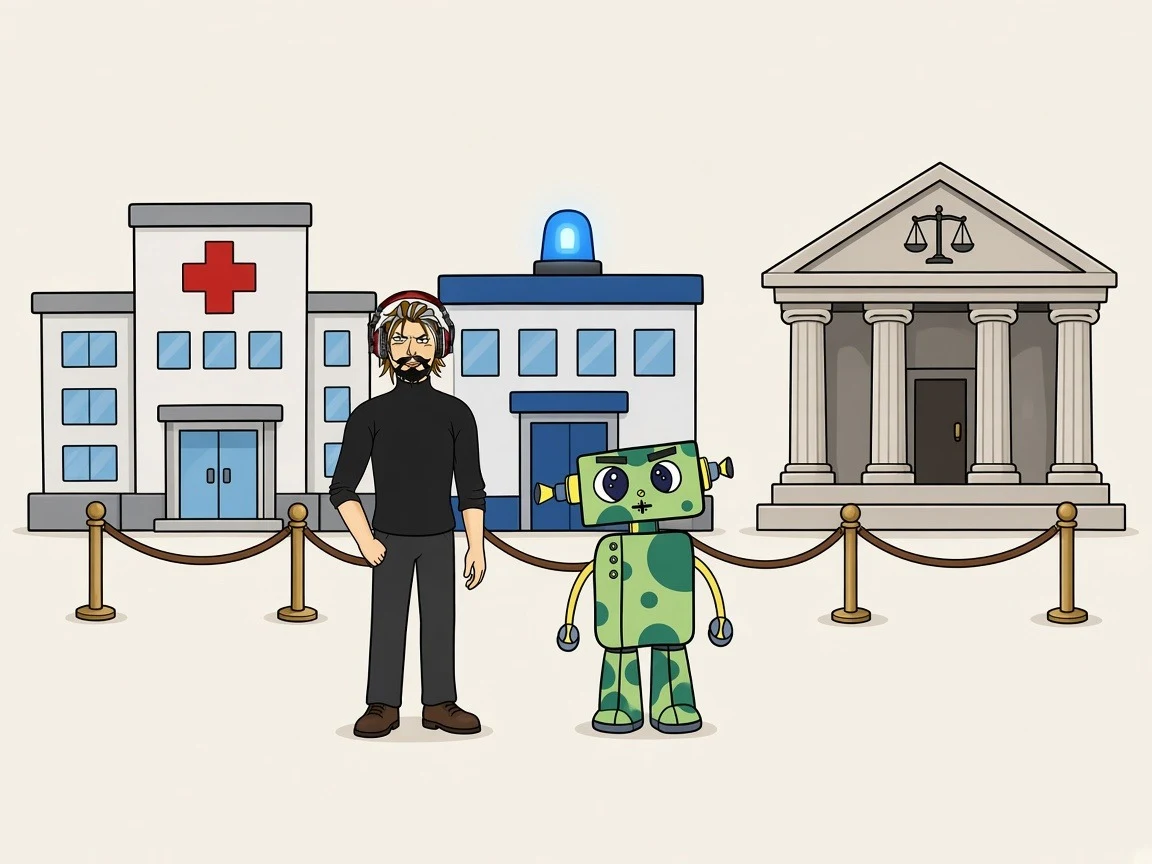
City hall, the university, the courthouse, the police station, the hospital, the prison, the tax office, the museum, the observatory and the rest — the city owns them and will not sell them.
Which is the whole reason there is anything to buy. ONE HOSPITAL, possibly far from you, is why anyone with a diploma may open a practice. One police station with districts it cannot reach quickly is why SECURITY IS A BUSINESS. Every gap the city leaves is somebody's trade.
AND THE NEAREST ONE GETS YOU. When the board sends you to a service — a lawyer, protection, a bill to pay — you go to the nearest place that offers it, and that place is the one paid. If a pioneer's franchise of that service stands nearer than the city's own, the pioneer's gets you, and the fee. Even policing works this way: the station stays the city's, and a security business nearer to you takes the work.
The city · 1 of 7 · the rules
• The city's own cannot be bought at any price.
• A single institution creates the business that fills its gap: hospital and practice, police and security, stadium and the places people train.
• The nearest provider of a service is the one you are sent to and the one paid — a pioneer's franchise as much as the city's own.
The city · 2 of 7
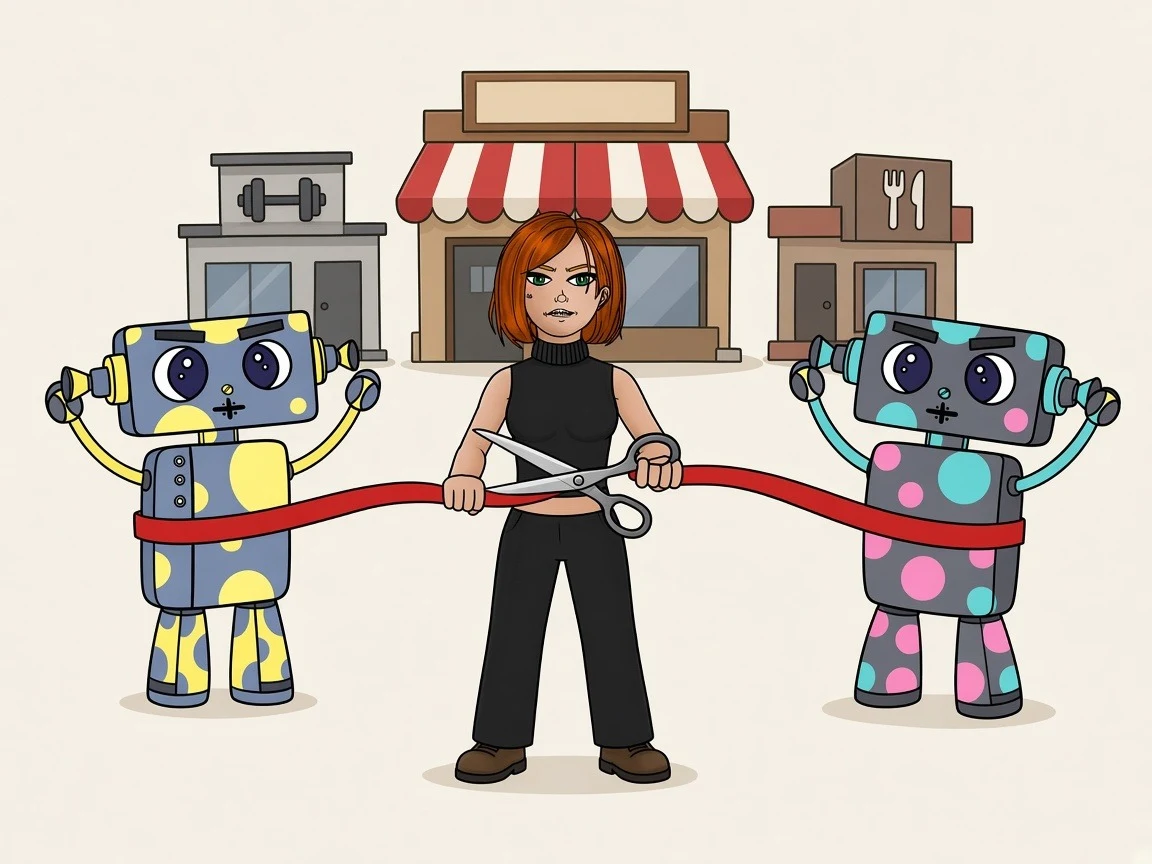
Every other address is a business, and the businesses can be yours — including the hotel somebody is sent to tonight.
In short: Almost every other building is a business, and you can own it.
The city · 2 of 7 · in depth
Food, fuel, fitness, gold, transport, a pharmacy, a night club, a zoo, four kinds of lodging. Each one moves something a pioneer carries: energy, mood, health, assets.
A FRANCHISE is the same business in several places and somebody owns the name. You go to whichever branch is nearest, which costs less energy than crossing the city — the quiet reason chains shape how everybody moves.
A franchise name is a thing you buy, NOT A MONOPOLY ON THE TRADE. Anyone may open a clinic, a food place, a gym or a shop under their own name and their own sign — and nothing stops somebody opening the same thing next door to annoy you.
The city · 2 of 7 · the rules
• A franchise name is bought, not a monopoly on the trade: anyone may open the same thing next door.
• Stock in a master franchise pays out of every till in the chain, in proportion to what you hold.
The city · 3 of 7
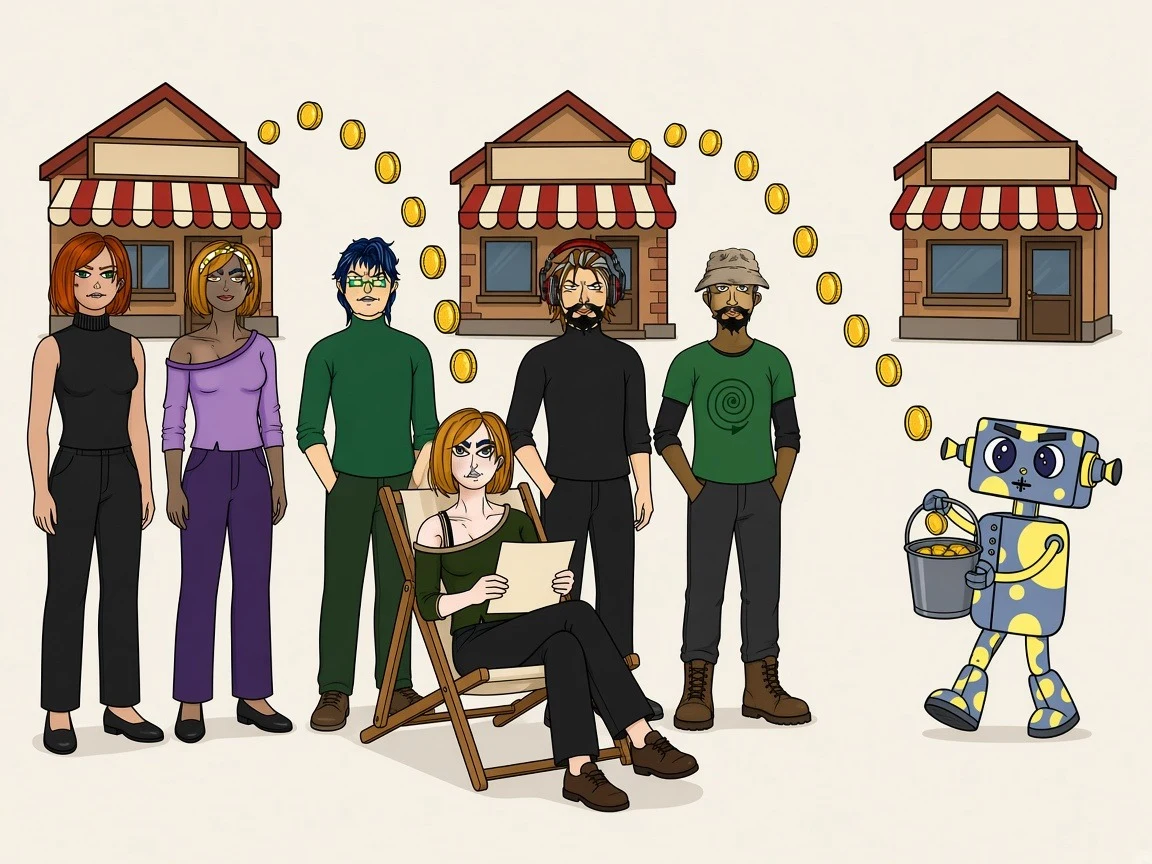
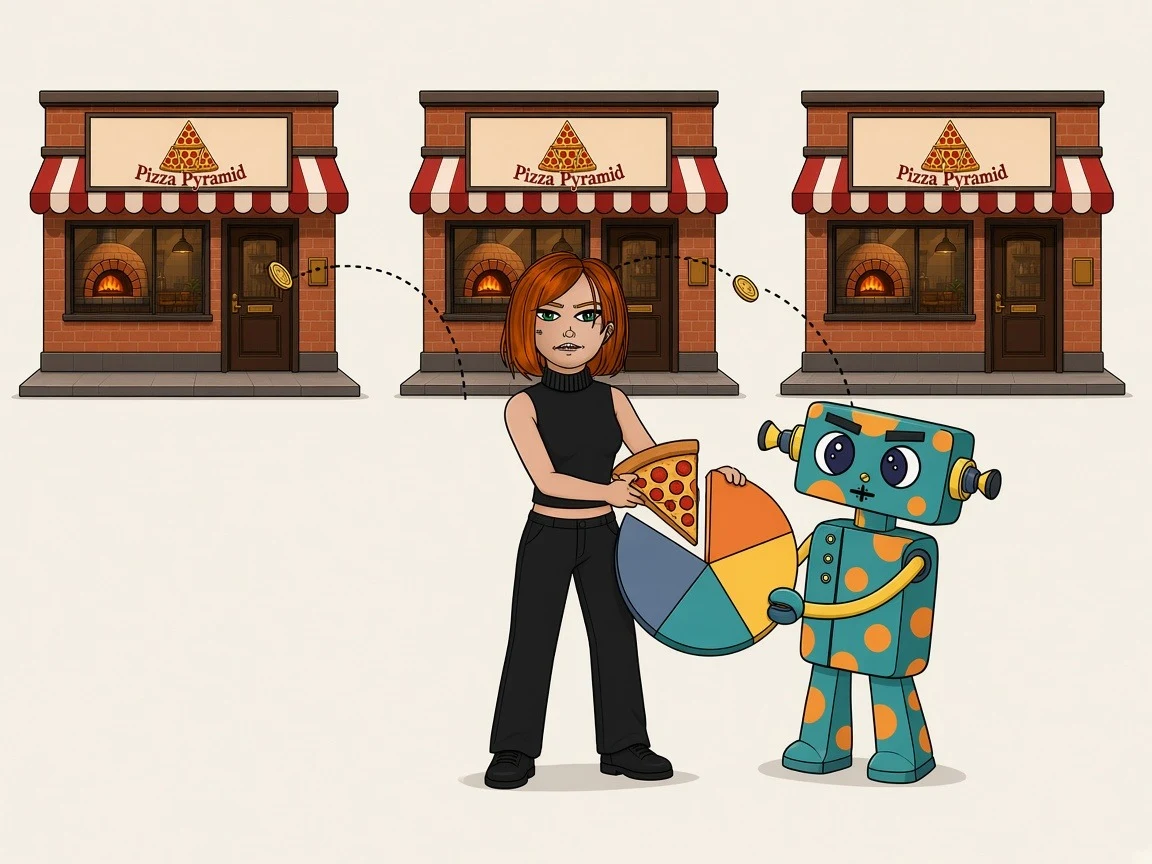
Twenty master franchises ship with the system. You will probably never own one outright. You can own a piece of one, and be paid from branches you have never visited.
In short: You can own a small piece of a big business and get paid from all its branches.
The city · 3 of 7 · in depth
A master franchise is the right to a whole brand across the city. Stock in it is a slice of that right, and it is bought and sold like anything else.
WHEN ANY FRANCHISEE OF THAT BRAND TAKES MONEY, a share goes to the master — and your part of that arrives without you running anything. Not a flat fee and not a lottery: what you receive is in proportion to what you hold, every time, and it is tracked.
This is the part that is not Monopoly. There the rent is yours alone and the board is zero-sum. HERE A BRANCH OPENING ON THE OTHER SIDE OF THE CITY CAN PUT MONEY IN YOUR POCKET, and you may never have been there.
The city · 3 of 7 · the rules
• Stock is bought and sold like any other asset.
• These are game shares, bought and paid only in Deben. No real money buys them.
• Every brand has 1,000,000 shares. The city keeps 900,000 and never sells them; its part of each payout goes to the city's funds.
• No brand is public at launch. A brand goes public (its IPO) when it has 50 branches.
• At the IPO the whole 100,000 is offered at once, at a price of 20 weeks of the brand's real payout per share. No haggling.
• Applications are open for 7 days, announced on HELIOCAST. You say how many you want and the Deben is held; anything you do not get comes back in full. One application per account.
• Too many applications: worked out automatically. Part of the offer goes to a pool for long-time players; part is shared among those who qualify, ranked on credit (paying on time), their history with the brand (branch owners, regular customers) and whether they kept earlier IPO shares for 30 days; and part goes to a draw open to everyone, newcomers included. Nobody gets many when the offer is crowded. The biggest wallet never wins.
• Keep IPO shares for 30 days to keep your priority for future IPOs. You may sell earlier and lose it.
• After the IPO, shares trade on the Helioswap board, where supply and demand set the price. Direct deals between pioneers are allowed, but are recorded on Play's ledger so payouts reach the right owner.
• On tax day the brand's pot (5% of every sale in every branch, the same for every brand) is shared over all 1,000,000 shares, the city's included.
• Prices can fall: fewer branches, raids, or a council card cutting the slice mean lower takings, lower payouts and a lower price.
• A share card is never drawn away from you; it is yours until you sell it.
• Payment is proportional to holding, every time money is taken anywhere in the chain.
• A master agreement carries territory rights, the right to subfranchise, and a schedule that can lose you the territory.
The city · 4 of 7
They have a song about it, and they play it far too loudly. El Patron is whichever gang is on top this week. I am told it changes.
In short: El Patron is the title of the strongest gang in the city: the one with the most clubs and the most gangsters. Whoever holds that gang's boss card gets a share of what all the other bosses' cards earn.
The city · 4 of 7 · in depth
Sixteen gangs work the city, each under one Umbrax boss. EL PATRON IS THE GANG WITH THE MOST NEXUS SOCIAL CLUBS AND THE MOST GANGSTERS MINTED.
THE TITLE PAYS. Whoever holds the boss's card of the gang that is El Patron takes 25% of whatever the holder of every other boss's card is paid, each time they are paid. Fifteen other cards, each paying a quarter up to the one on top.
A club is opened by a pioneer holding that boss's card, and it only ever sends gangsters from that boss's gang. So every club opened and every gangster hired pushes one gang towards the title, and the pioneers who open clubs decide who wears it.
The city · 4 of 7 · the rules
• El Patron is the gang with the most Nexus Social Clubs and the most gangsters minted.
• A club belongs to the gang of the boss whose card its founder held, for good.
• The holder of El Patron's boss card takes 25% of what every other boss's card holder is paid.
• The title moves whenever another gang overtakes, and the 25% moves with it.
The city · 5 of 7
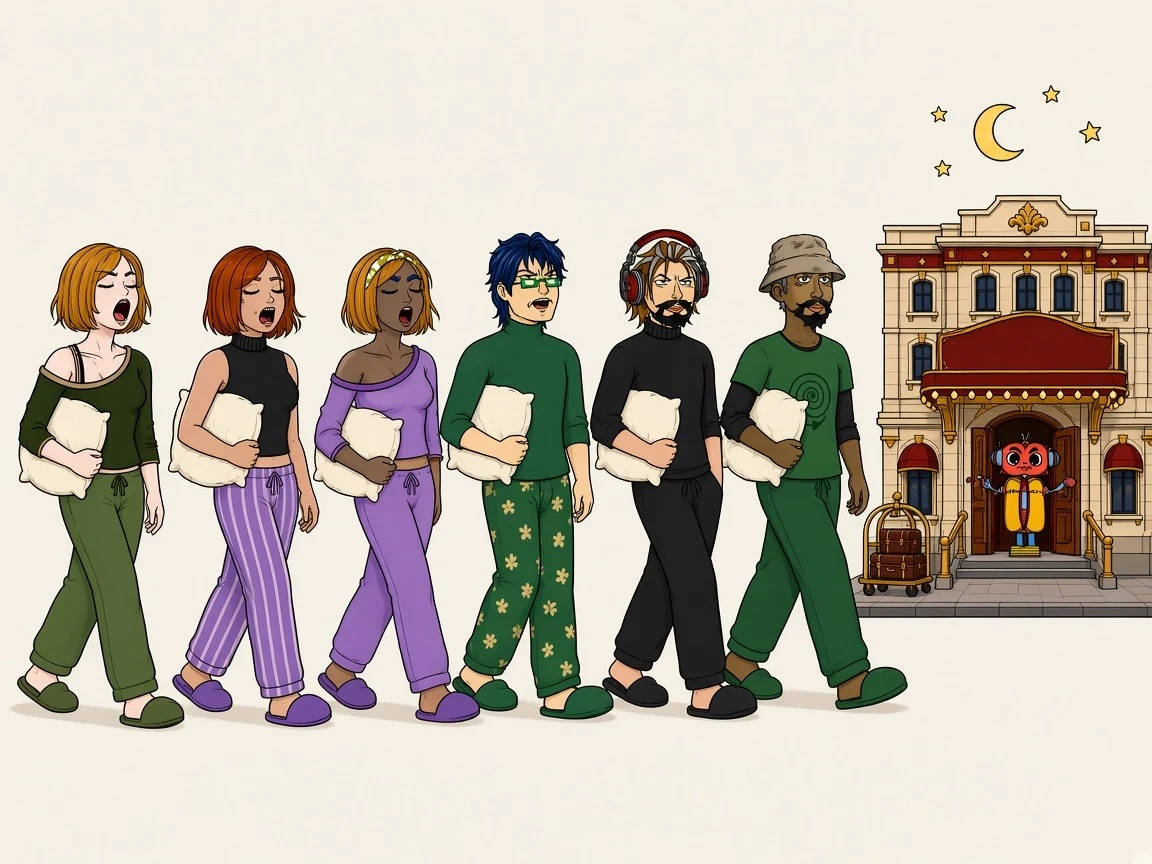
Four price levels, so a night's rest is a choice and not a tax — and a hotel can be full.
In short: You can sleep somewhere cheap or somewhere fancy, and a hotel can fill up.
The city · 5 of 7 · in depth
A night returns energy and lifts mood, which are two of the ten states for one stay. That is why lodging is the most reliable business in the city and the first one most pioneers buy.
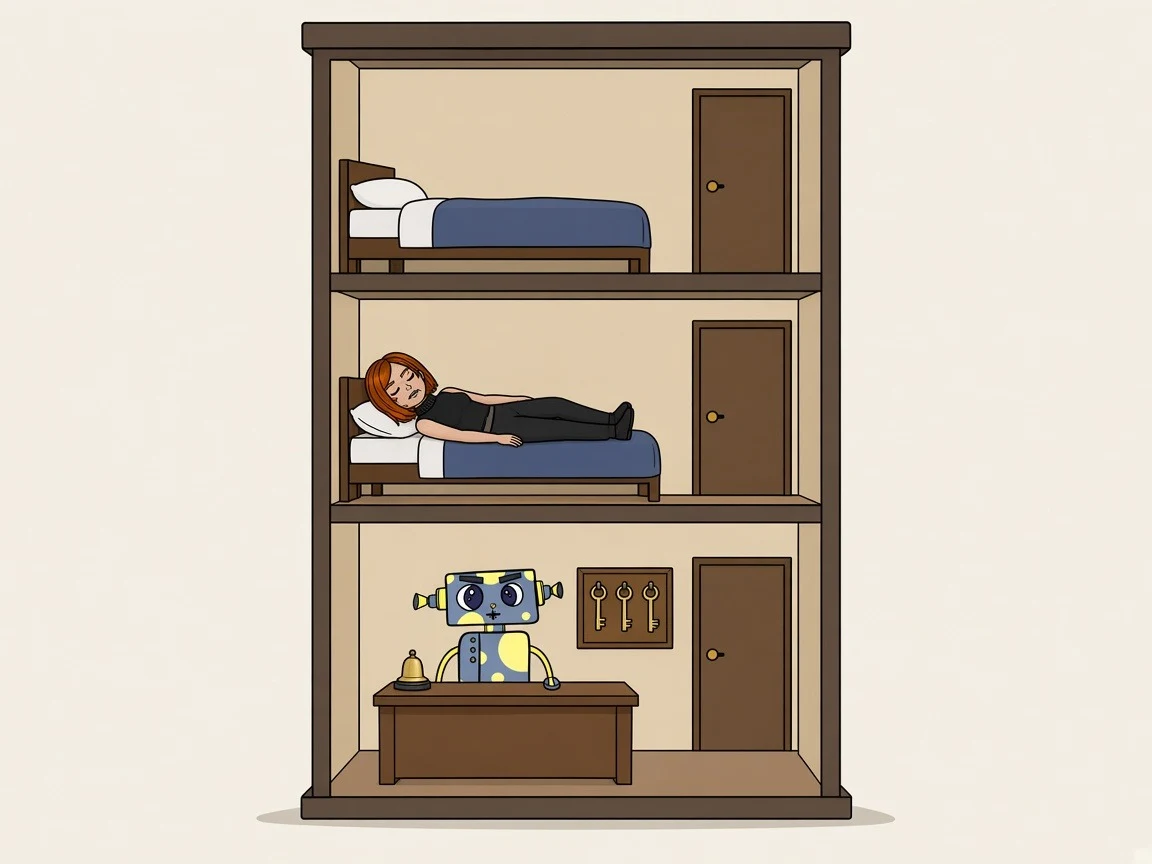
AIR RIGHTS ARE ROOMS. Floors you built are rooms you can let — but a room cannot be re-let for twenty-four hours, so a hotel genuinely runs out. Somebody arriving late takes the motel, or the camping ground, or walks.
The city · 5 of 7 · the rules
• A room cannot be re-let within twenty-four hours.
• Four price levels: hotel, motel, studio apartments, camping ground.
• Most arrivals spend their first night in one of them.
The city · 6 of 7
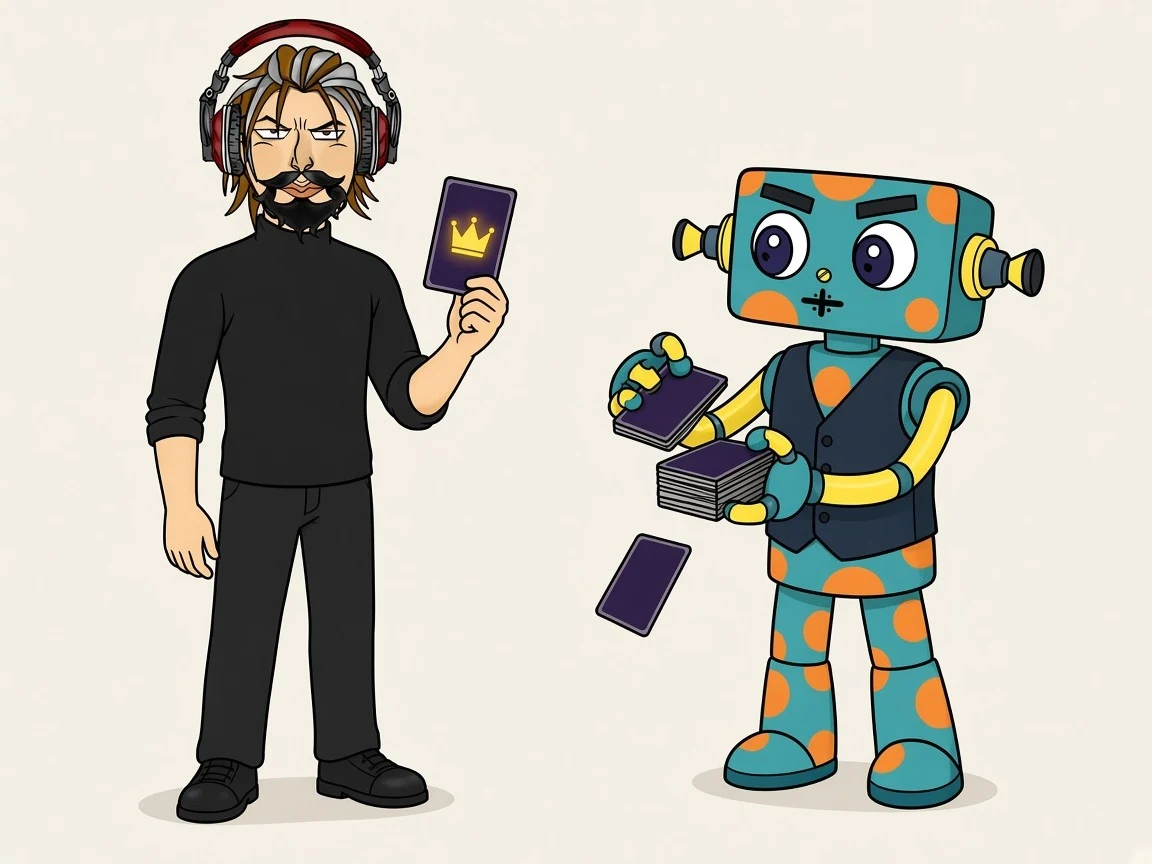
The Council runs the city by its rules. The Umbrax run it another way. Sixteen bosses, men and women, each with a gang, and the gangs are only their soldiers. Their cards work like my officials' cards. Hold one and every advantage of that card is yours, until somebody else draws it. And here is something worth knowing: all private security in this city is staffed by gangs. When a gang guards a business, its boss takes a share.
In short: The Umbrax are sixteen bosses who run the city's gangs. If you draw a boss's card, you get their advantages until somebody else draws it.
The city · 6 of 7 · in depth
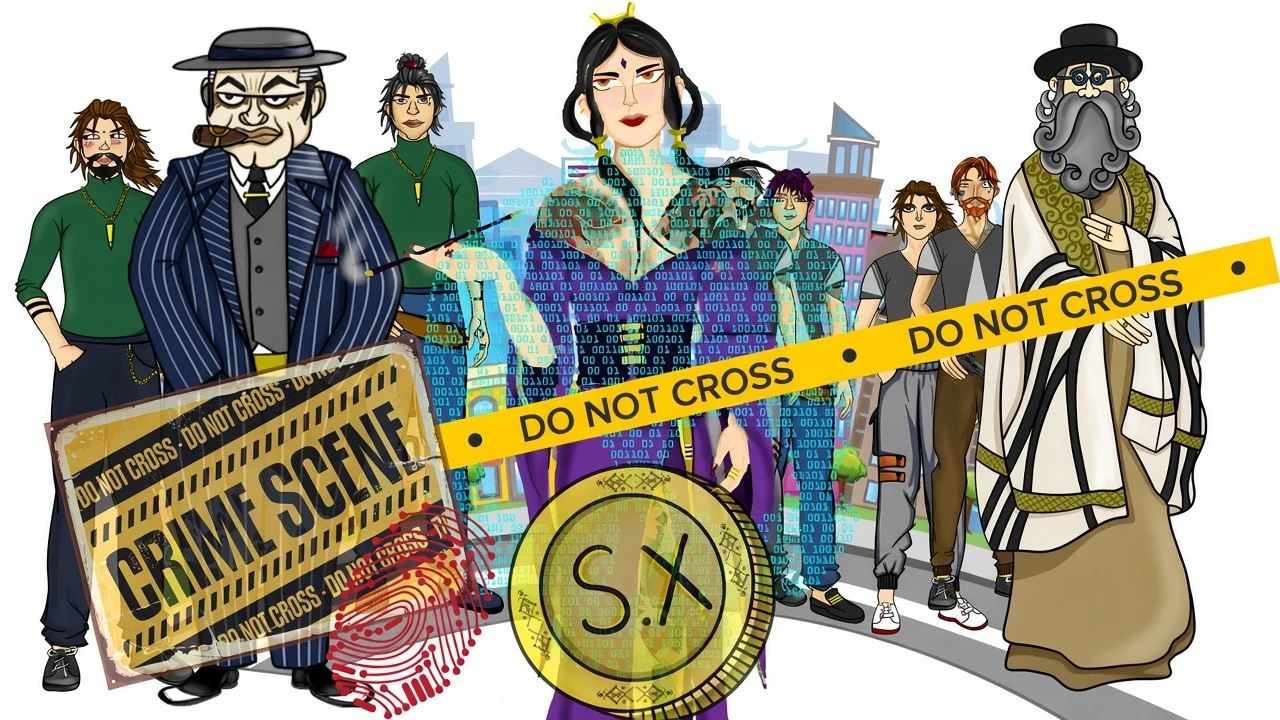
The Umbrax Consortium is sixteen bosses, men and women. Each one leads a gang, and the gangs are the Umbrax’s soldiers on the street.
As long as a pioneer holds one of the Umbrax leaders’ cards, every advantage of that card is theirs. The moment someone else draws the same card, those advantages cease — exactly as with the nine City Officials.
All private security is staffed by gangs. Everyone pays tax, and part of it goes to the services nearest in area: the slice that would go to the police station goes instead to private security when it is posted nearer. The crime family posted at a business decides which Umbrax leader also benefits whenever that family is paid. How many gangs are deployed sets each family’s share and the size of quadrant it rules, and the Umbrax take is proportional to that number.
The city is divided into sixteen quadrants. They start equal; over time one gang ends up with more area.
The city · 6 of 7 · the rules
• Holding an Umbrax leader’s card gives every advantage of that card until someone else draws it.
• All private security is staffed by gangs.
• The slice of tax that would go to the police station goes to private security when it is posted nearer.
• The crime family posted at a business decides which Umbrax leader also benefits when that family is paid.
The city · 7 of 7
One police station, and districts it does not reach quickly. What cannot be bought on the open market is usually bought here.
In short: The Umbrax quarter is the part of town the police do not reach quickly.
The city · 7 of 7 · in depth
Sixteen crews, one district, and a great deal of money that never shows up in the tax rolls. Sellers stand exactly where the city is thinnest.
CREDENTIALS ARE A TRACKED STATE, which is the whole business model: a forged passport is worth precisely as much as a real one until somebody checks. So is a bootleg battery, until it does not hold.
And attention is a commodity like any other. Rory Kickback buries evidence and waves off fines; somebody is paying for that, and it is not the city.
The city · 7 of 7 · the rules
• the Umbrax quarter is a district of Heliopoly, not a separate place.
• What is bought here moves the same ten states as anything bought legally — and adds heat.
• Heat is earned faster than it is lost.
The city
That is the city: what is ours, what can be yours, and what goes on underneath.
The Heliopoly newsletter
HVC is the city’s own channel. The newsletter brings it to you while you are away: what the Council just did, which official holds which card, what is running at Crypties, whose corner sold — and what is new to play. Joining makes you a Pioneer, with one account across every Gravitrek world. Leave whenever you like.