Step 1 of 20
I want to make money while I sleep
The city never stops, and neither does what you own. Here is how your places, your robots and your shares earn while you are away.
the space city
How Heliopoly works · one section, step by step
Let me take you through it, one step at a time.
This section
The story steps you need for this, each followed by its rules in depth.
Opens large and plays by itself, with the Mayor's voice: about 11 minutes. You can pause it or go at your own pace.
Step 1 of 20
The city never stops, and neither does what you own. Here is how your places, your robots and your shares earn while you are away.
Step 2 of 20
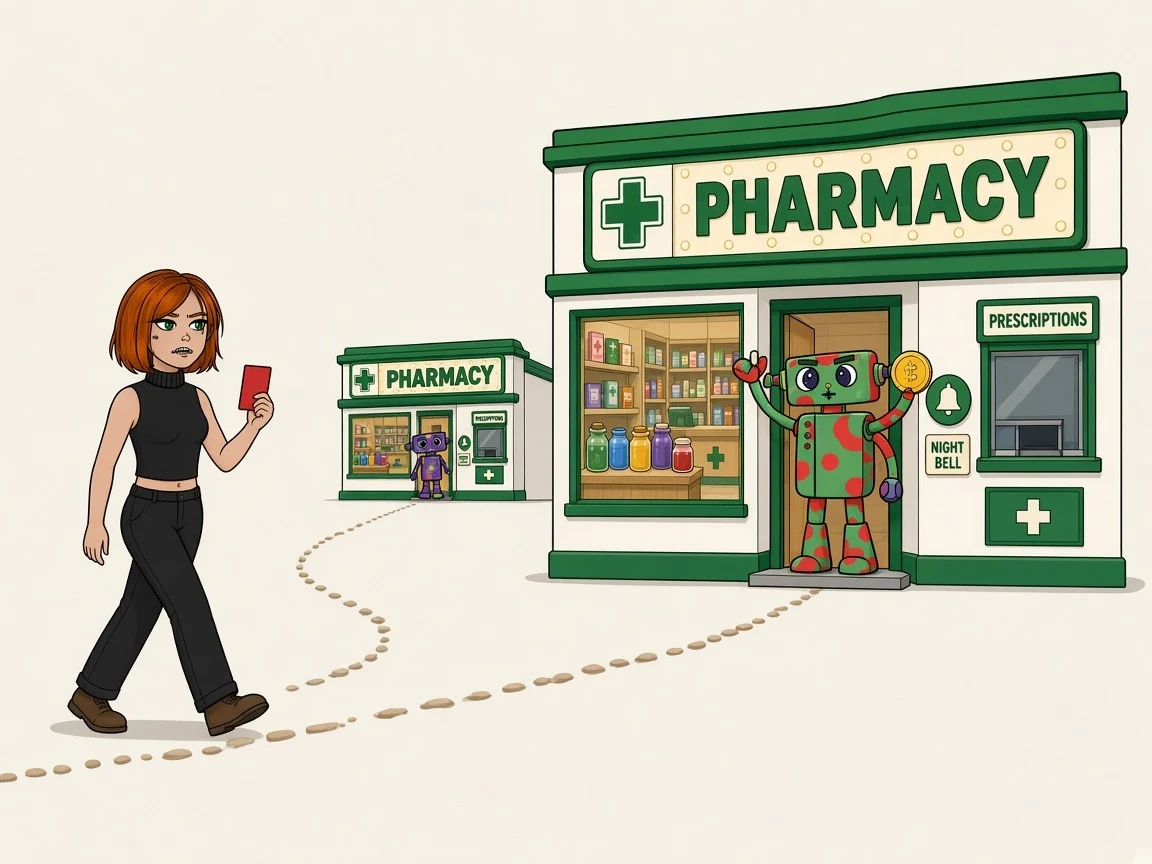
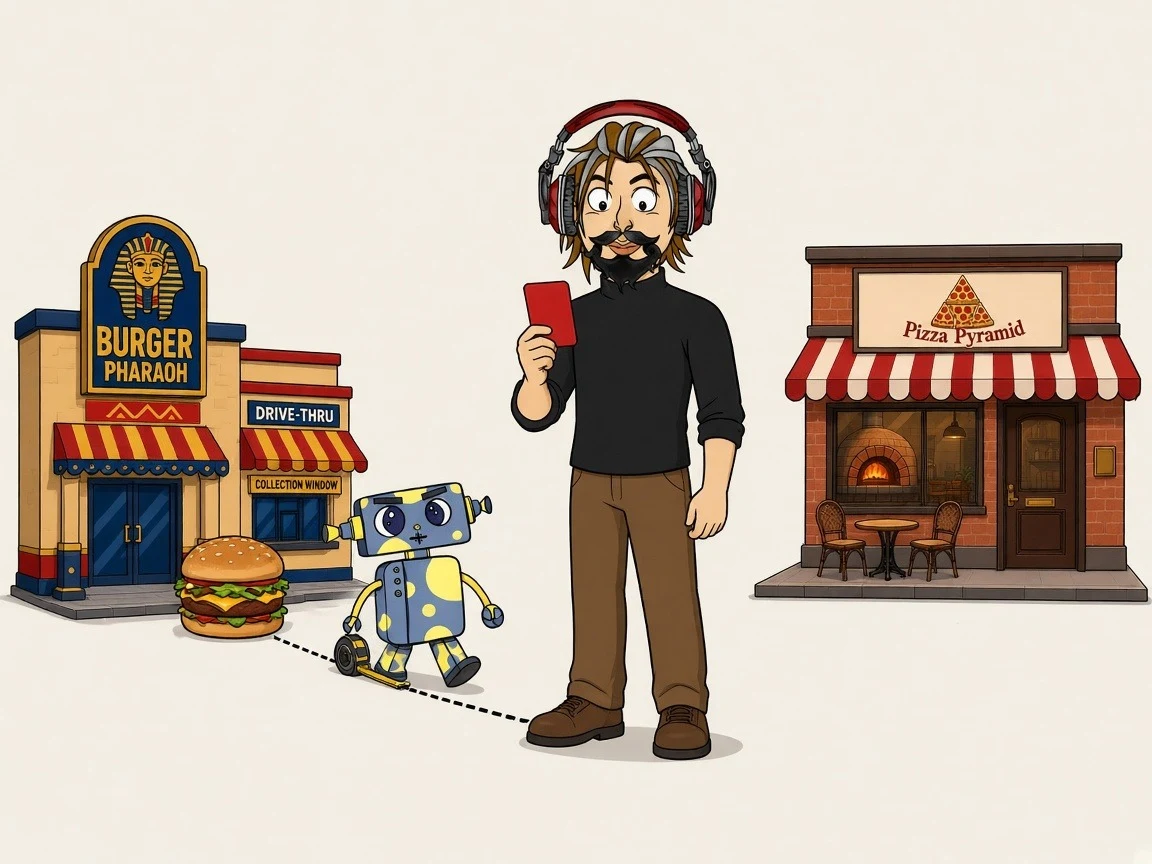
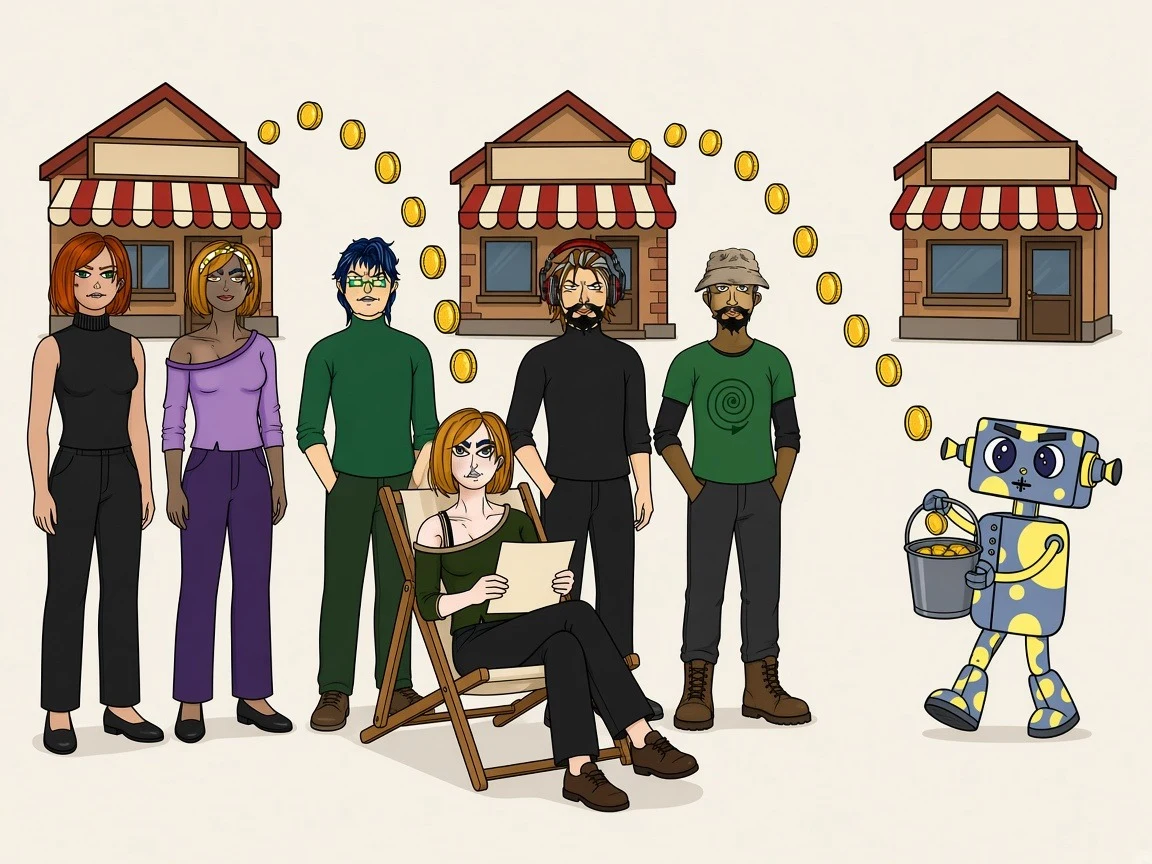
Here is the heart of the game. When a card sends a pioneer for a meal, a bed or a paper, they go to the NEAREST place that offers it, and that place is paid. So where you build matters more than anything.
In short: Location, location, location.
Step 3 of 20 · in depth
Whenever the board sends a pioneer to a service — they need a lawyer, police protection, or must pay something — the pioneer goes to the NEAREST place that offers it, and that place is paid. Distance is measured from wherever the pioneer is standing.
The city keeps one of its own institutions: one police station, one court, and so on. If a pioneer’s franchise of the same service stands nearer than the city’s own, the pioneer’s franchise gets the pioneer, and the fee. The city’s police station stays the city’s; a pioneer’s security business standing nearer takes the work.
This is what makes professions and franchises possible at all, and it is the guarantee behind building: a pioneer who builds a business that offers a service is sent the customers whose cards ask for that service and who stand nearer to it than to anything else offering the same.
Every building type, business and profession has its own conditions (permits, licences, diplomas, staffing and the like).
Step 4 of 20 · the rules
• A card names a kind of service, not an address.
• The pioneer goes to the nearest place that offers it, measured from where they stand, and that place is paid.
• A pioneer’s business nearer than the city’s own gets the customer and the fee.
• The city’s own institutions stay the city’s; the law office is a franchise.
Step 5 of 20
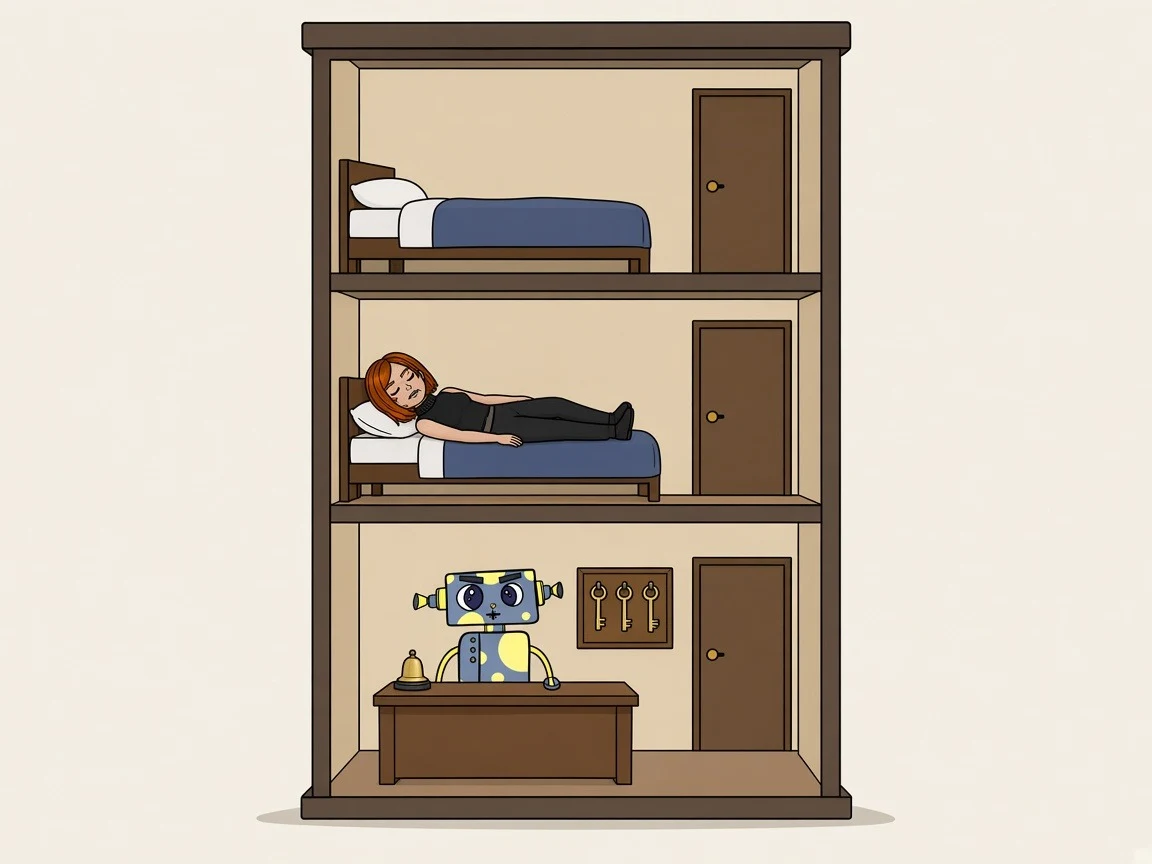
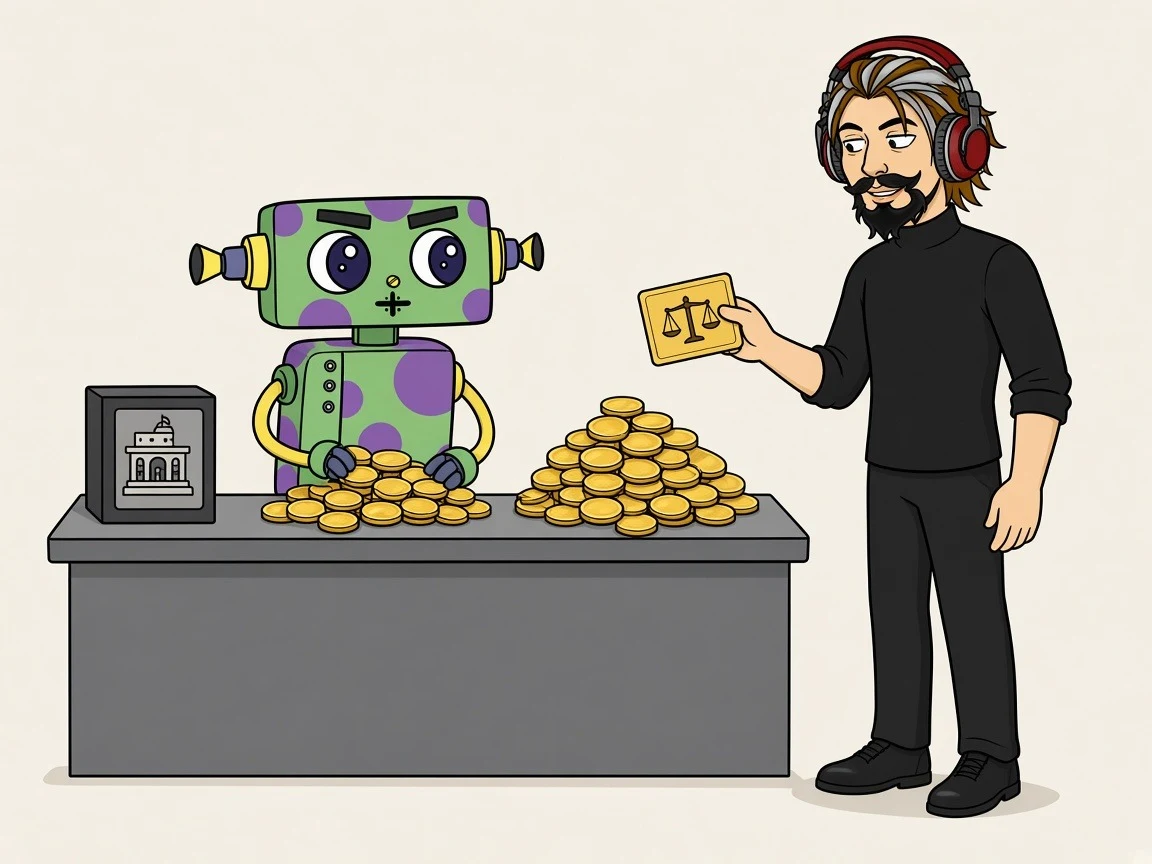
You do not stand behind the counter. Your robots serve the customers and reorder the stock. They run on Yazami batteries, which are recharged at a charging station.
In short: Charged robots keep earning while you are away.
Step 6 of 20
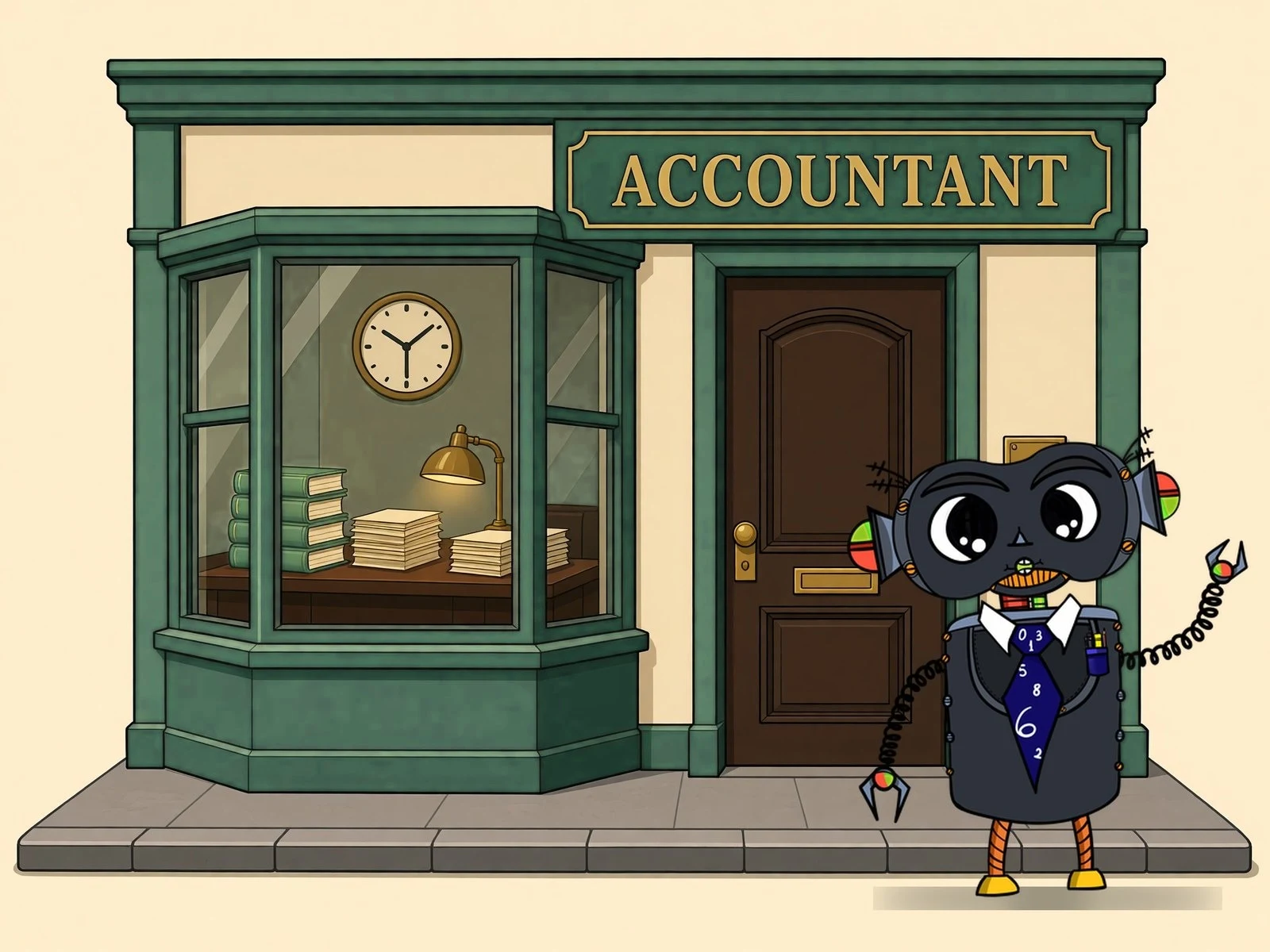
Life is busy. An accountant settles your bills for you, so being away from the city costs you nothing.
In short: Set it once. Come back when you like.
Step 7 of 20 · in depth
Someone stops at your premises and pays. A business takes money over its counter. Stock in a master franchise pays out of every till in the chain. None of it asks whether you are logged in.
The only part that needs a person is the weekly demand, and that is the part you can hand over. ONE ACCOUNTANT COVERS EVERYTHING YOU HOLD, settles on the day, and banks the rest.
Step 8 of 20 · the rules
• An accountant pays exactly what you would have paid. It buys absence, not advantage.
• Hire one for a standing fee, or qualify at the university and keep your own books.
• One fee, whatever you hold. There is no second charge for the second building.
Step 9 of 20
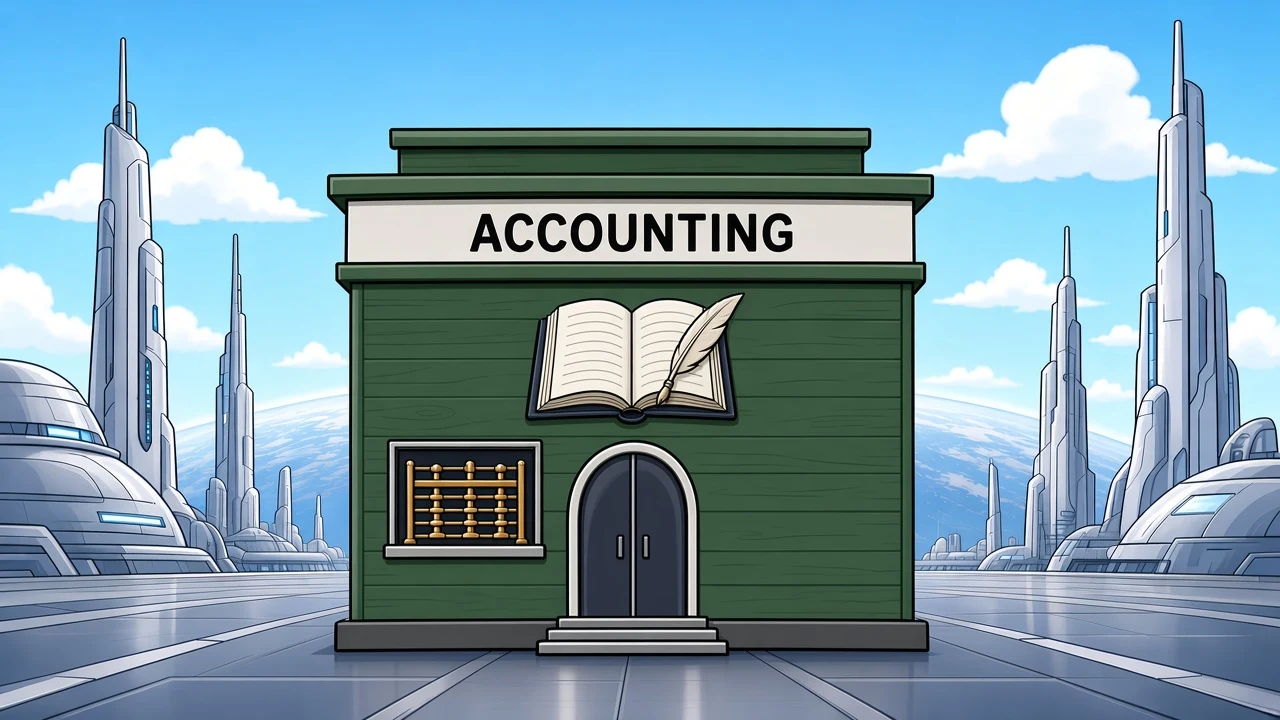
An accounting practice is a business a pioneer can own. It pays other people's bills while they are away.
Step 10 of 20
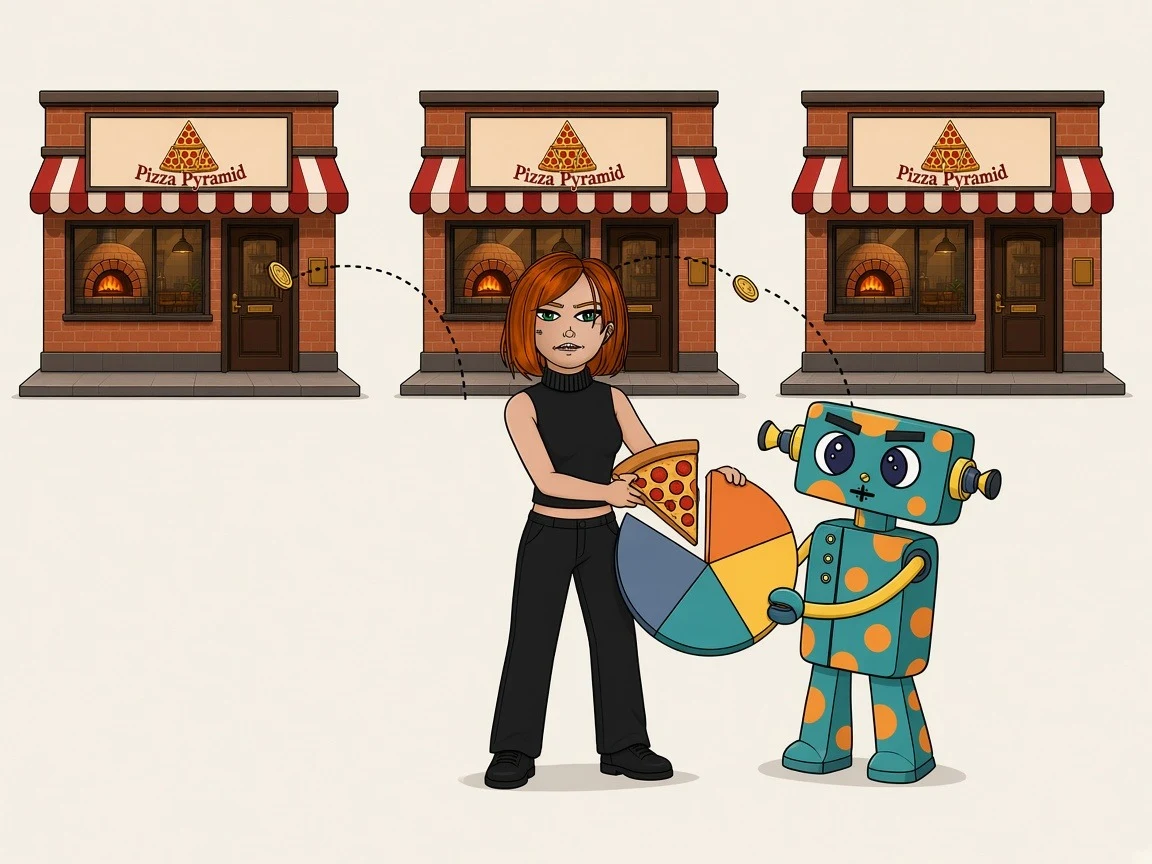
Here is another way to play. Every famous name, like Pizza Pyramid, is divided into shares. Hold one, and on tax day you receive a small part of what every one of its shops took, all over the city. Grown-ups call this owning shares. They are game shares, paid for in Deben.
In short: You never served a pizza, and still you earn from every one.
Step 11 of 20 · in depth
A master franchise is the right to a whole brand across the city. Stock in it is a slice of that right, and it is bought and sold like anything else.
WHEN ANY FRANCHISEE OF THAT BRAND TAKES MONEY, a share goes to the master — and your part of that arrives without you running anything. Not a flat fee and not a lottery: what you receive is in proportion to what you hold, every time, and it is tracked.
This is the part that is not Monopoly. There the rent is yours alone and the board is zero-sum. HERE A BRANCH OPENING ON THE OTHER SIDE OF THE CITY CAN PUT MONEY IN YOUR POCKET, and you may never have been there.
Step 12 of 20 · the rules
• Stock is bought and sold like any other asset.
• These are game shares, bought and paid only in Deben. No real money buys them.
• Every brand has 1,000,000 shares. The city keeps 900,000 and never sells them; its part of each payout goes to the city's funds.
• No brand is public at launch. A brand goes public (its IPO) when it has 50 branches.
• At the IPO the whole 100,000 is offered at once, at a price of 20 weeks of the brand's real payout per share. No haggling.
• Applications are open for 7 days, announced on HELIOCAST. You say how many you want and the Deben is held; anything you do not get comes back in full. One application per account.
• Too many applications: worked out automatically. Part of the offer goes to a pool for long-time players; part is shared among those who qualify, ranked on credit (paying on time), their history with the brand (branch owners, regular customers) and whether they kept earlier IPO shares for 30 days; and part goes to a draw open to everyone, newcomers included. Nobody gets many when the offer is crowded. The biggest wallet never wins.
• Keep IPO shares for 30 days to keep your priority for future IPOs. You may sell earlier and lose it.
• After the IPO, shares trade on the Helioswap board, where supply and demand set the price. Direct deals between pioneers are allowed, but are recorded on Play's ledger so payouts reach the right owner.
• On tax day the brand's pot (5% of every sale in every branch, the same for every brand) is shared over all 1,000,000 shares, the city's included.
• Prices can fall: fewer branches, raids, or a council card cutting the slice mean lower takings, lower payouts and a lower price.
• A share card is never drawn away from you; it is yours until you sell it.
• Payment is proportional to holding, every time money is taken anywhere in the chain.
• A master agreement carries territory rights, the right to subfranchise, and a schedule that can lose you the territory.
Step 13 of 20
At first, the city holds all the shares. When a brand has opened fifty shops, the city offers some to the pioneers, in one big sale at Helioswap. If too many people want them, its shop owners, its loyal customers and long-time players each get their part, and a draw gives newcomers a chance too. Afterwards, shares are bought and sold freely, and their price goes up and down.
In short: The biggest wallet never wins. Everyone gets a chance.
Step 14 of 20
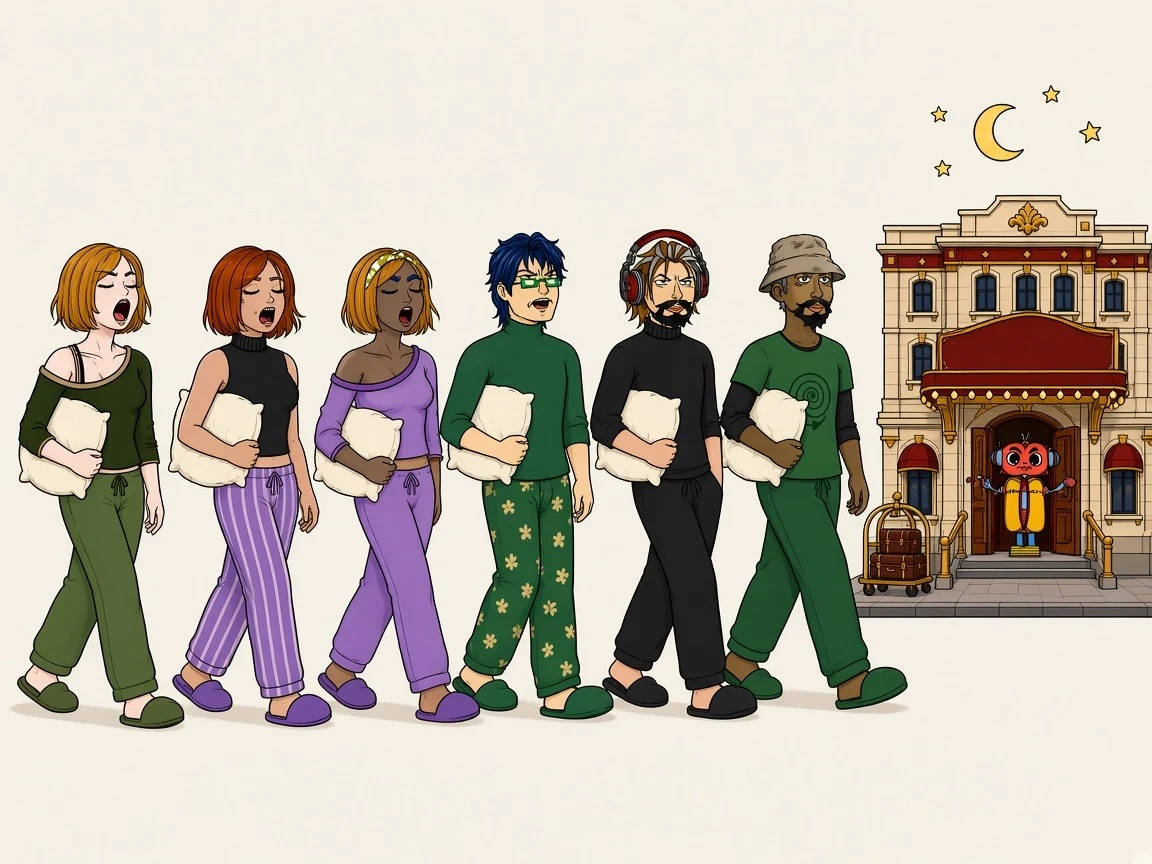
Four price levels, so a night's rest is a choice and not a tax — and a hotel can be full.
Step 15 of 20 · in depth
A night returns energy and lifts mood, which are two of the ten states for one stay. That is why lodging is the most reliable business in the city and the first one most pioneers buy.
AIR RIGHTS ARE ROOMS. Floors you built are rooms you can let — but a room cannot be re-let for twenty-four hours, so a hotel genuinely runs out. Somebody arriving late takes the motel, or the camping ground, or walks.
Step 16 of 20 · the rules
• A room cannot be re-let within twenty-four hours.
• Four price levels: hotel, motel, studio apartments, camping ground.
• Most arrivals spend their first night in one of them.
Step 17 of 20
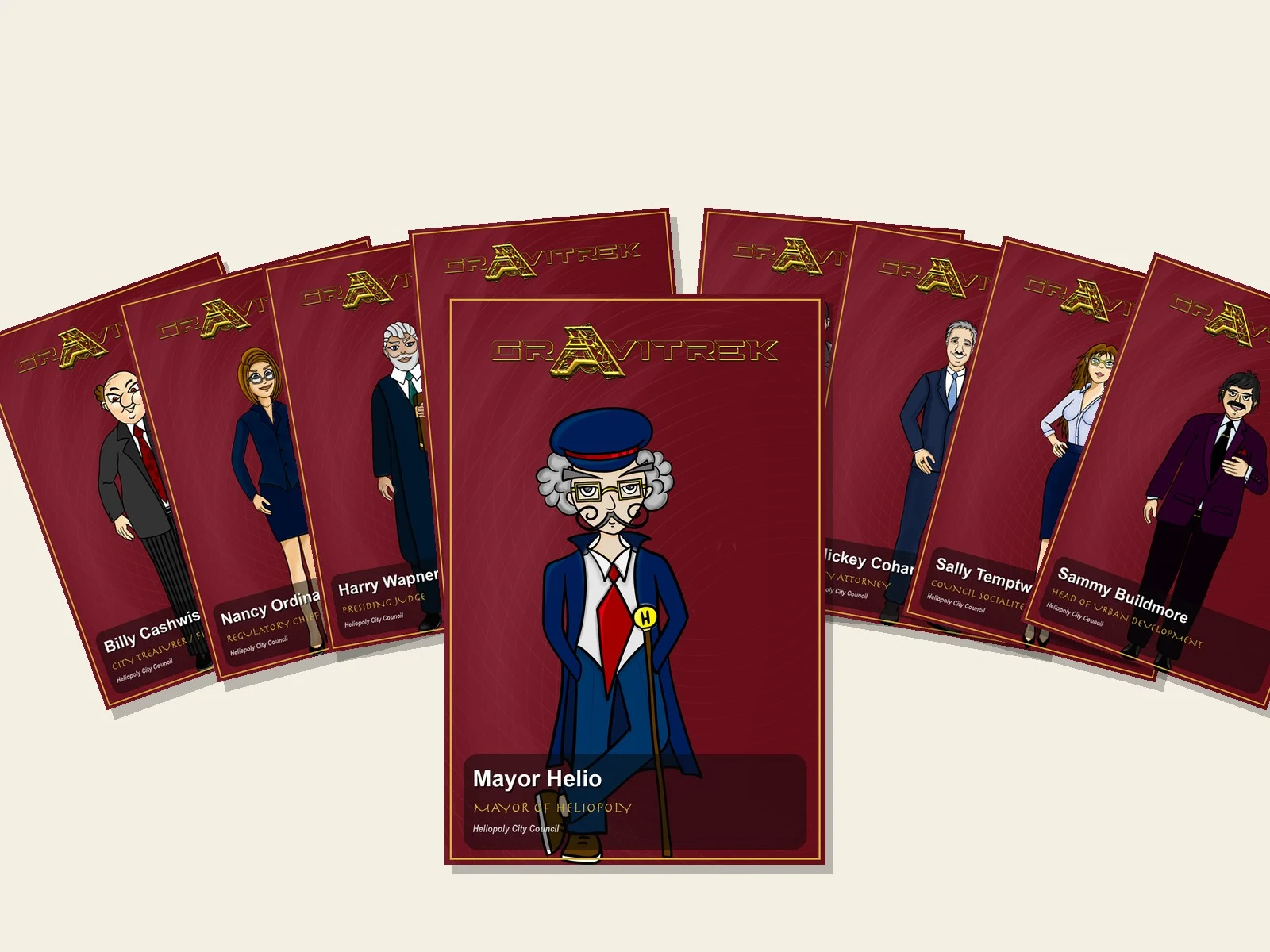
Holding one of us is not only about powers. Every office takes its cut, and the cut goes to whoever holds the card. It is one of the best things in the game.
Step 18 of 20 · in depth
Every fine, fee and bail the city collects is shared. The city keeps part; the rest goes to the holder of the card of the official it belongs to. It is paid out of the city's own share, so nobody pays more.
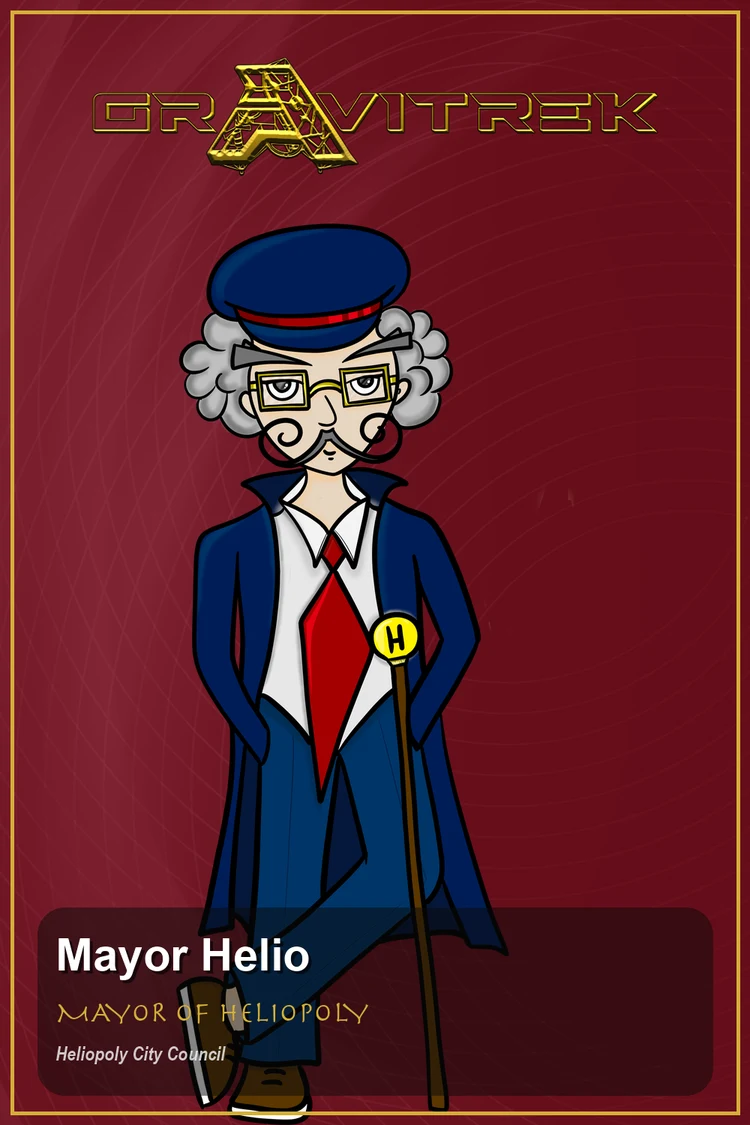
THE MAYOR takes a tenth of everything the city collects, tax excepted, because he already has Mr Helio's Treasure.
Step 19 of 20 · the rules
• Law matters (bail, court fines, legal penalties): city 50%, the Judge's card 20%, the Police Chief's card 20%, the City Attorney's card 10%.
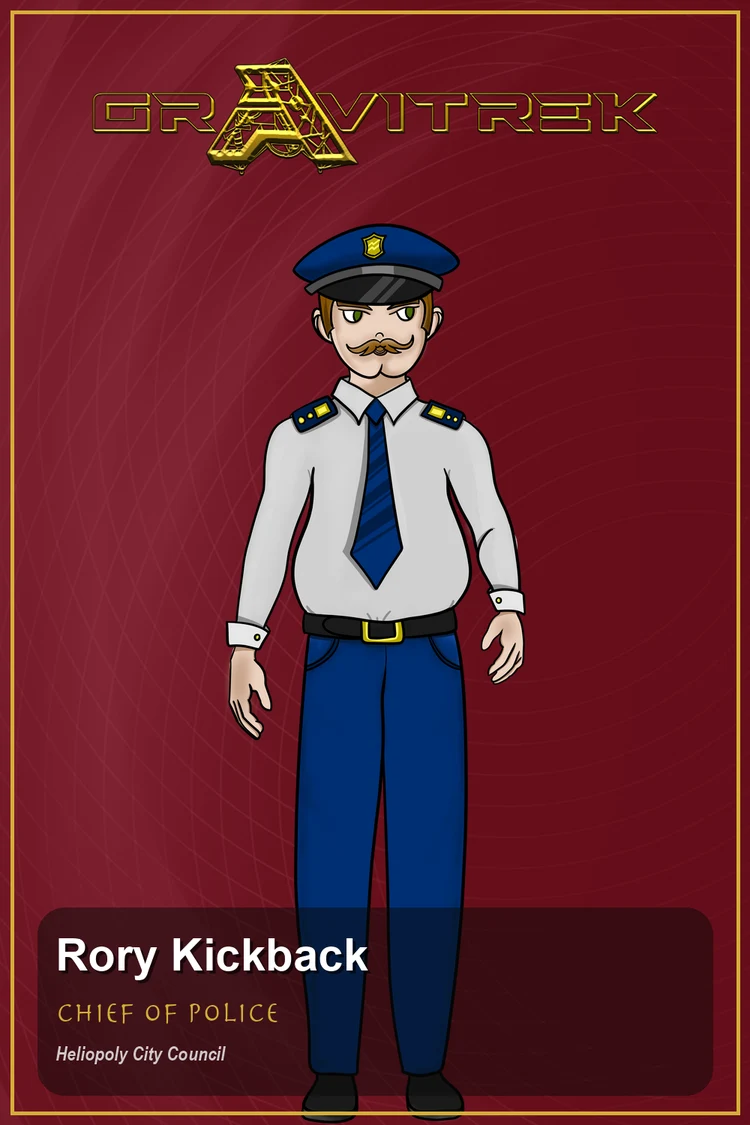
• Every other fine: half to the city, half to the one holder of that office's card: police fines to Rory Kickback's, tax fines to Tommy Twofold's, permit and licence fines to Nancy Ordinance's, building fines to Sammy Buildmore's.
• Immigration (visa renewals, residency filings, no-visa fines): city 50%, the Mayor's card 20%, the Police Chief's 15%, the Judge's 15%. Half of each residency paper's fee goes to its own official's holder.
• Billy Cashwise: 20% of every credit charge and of the city's bank and vault income.
• Harry Wapner: half of every Courthouse fee; 20% of the city's fee when a debt or a locker is auctioned.
• Mickey Cohan: 10% of every lawyer's fee; 10% of the city's fee on every franchise opening.
• Nancy Ordinance: 20% of every business licence and certificate fee; half of the fines from her inquiries.
• Rory Kickback: 20% of the city's half of every guard card; half of all S.X the police confiscate; half of every police paper fee. Whoever holds his card cannot be sent to jail.
• Sally Temptwell: 20% of entertainment and broadcast licence fees; 20% of tickets at the city's own venues; 5% of the city's proceeds when a brand goes public.
• Sammy Buildmore: 20% of every digging, building and demolition permit fee; 5% of every lot and air right the city sells.
• Tommy Twofold: 5% of all tax collected.
• A share nobody holds stays with the city.
Step 20 of 20
That is how you earn while you sleep. Build near people, let the robots work, and let an accountant mind the bills.
The Heliopoly newsletter
HVC is the city’s own channel. The newsletter brings it to you while you are away: what the Council just did, which official holds which card, what is running at Crypties, whose corner sold — and what is new to play. Joining makes you a Pioneer, with one account across every Gravitrek world. Leave whenever you like.