Step 1 of 34
I want to open a shop
So you want a shop of your own. Good. Land first, then a building, then the trade, then the papers. I will take you through every step, and the rules behind each one.
the space city
How Heliopoly works · one section, step by step
Let me take you through it, one step at a time.
This section
The story steps you need for this, each followed by its rules in depth.
Opens large and plays by itself, with the Mayor's voice: about 13 minutes. You can pause it or go at your own pace.
Step 1 of 34
So you want a shop of your own. Good. Land first, then a building, then the trade, then the papers. I will take you through every step, and the rules behind each one.
Step 2 of 34
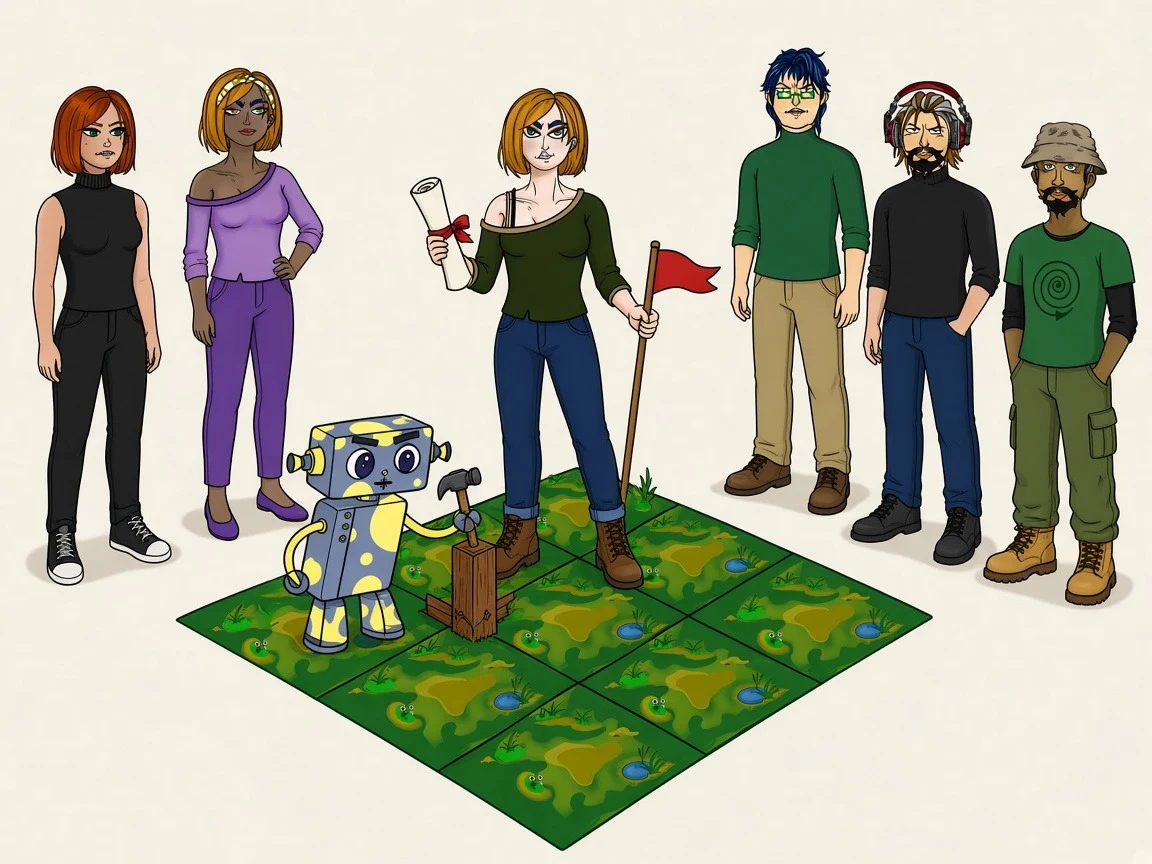
The city is a board of 41 by 41 lots. Buy one and it is yours. When most of the land is taken, the city opens new districts, so there is always room for a newcomer.
In short: A corner near busy places is worth more than a big lot far away.
Step 3 of 34 · in depth
A lot is ground plus AIR RIGHTS — twenty-five floors of sky on ground that would carry a hundred. The gap between those two numbers is the market, and the sky sells on its own.
Credit exists because a pioneer who has to save before acting is standing in a queue, and this game does not have one. BUY ON CREDIT and the deed is yours now; what you owe joins the weekly demand.
Step 4 of 34 · the rules
• Air rights and zoning each have a step of their own, next.
Step 5 of 34
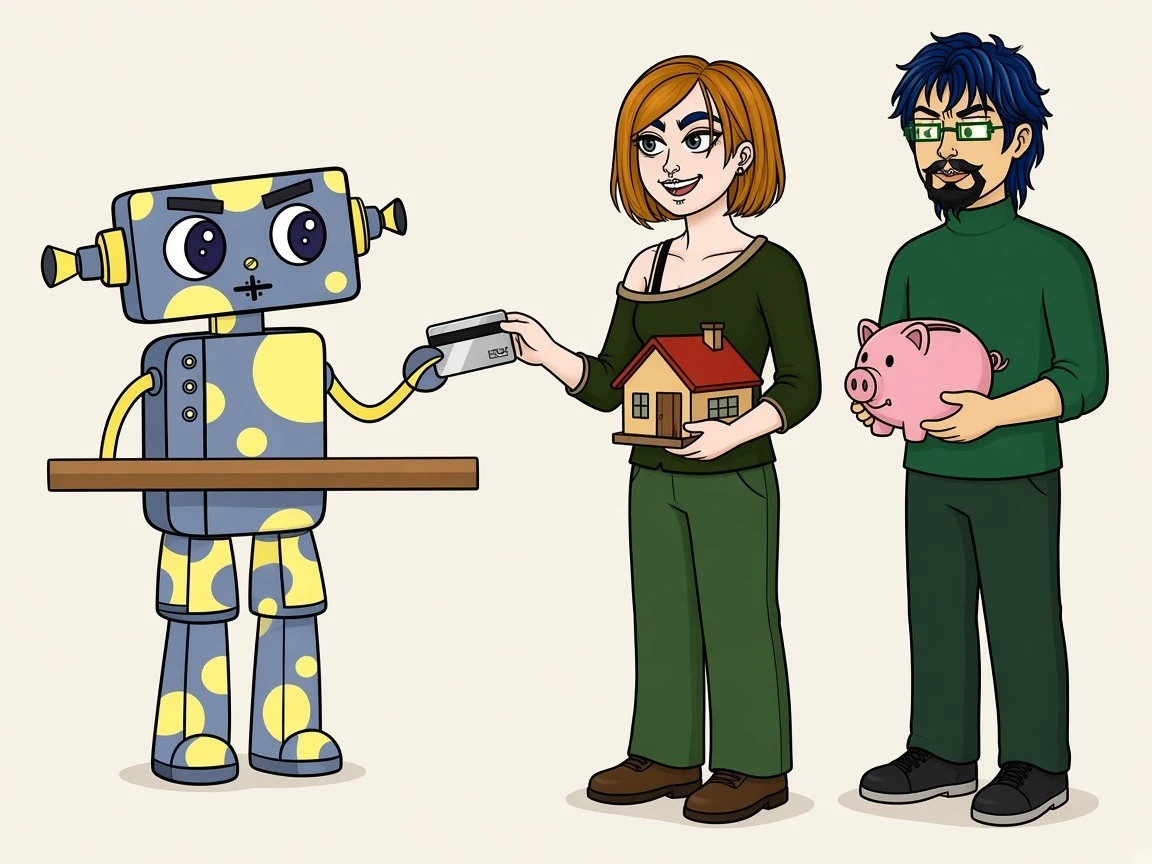
Not enough money today? Buy on credit. Every pioneer starts with the Pioneer card from Neterios Bank. Four more follow: Builder, Settler, Citizen and Royal Trustee, each lending more than the last. If you fall behind, nothing is ever taken from you: someone may buy your debt at auction and collect your income until it is paid.
In short: Pay on time and your card grows with you.
Step 6 of 34 · in depth
Nobody waits for a turn here, which only works if nobody has to wait to afford one either. CREDIT IS WHAT LETS A PIONEER ACT ON THE DAY THEY SEE SOMETHING rather than the month they have saved for it.
A lot bought on credit is yours immediately — built on, let, sold on, exactly like one bought outright. The bank is not a part-owner and never becomes one.
It is never cheaper than paying outright. It costs more, and what it buys is the day you can act — the same bargain the accountant offers: time, not advantage.
Step 7 of 34 · the rules
• The debt joins the weekly demand; it is not a second bill.
• It takes income, never the asset. Nothing bought on credit can be taken back.
• Far enough behind and the debt itself may be auctioned at Crypties. The deed still does not move.
• The Settler card is not for sale: it needs an official's card or a record with nothing on it.
• Citizen card: 50 Deben, for every newcomer.
• Builder card: half of what your land, floors, air rights and held cards are worth, recalculated every tax day.
• Settler card: twice the Builder limit; needs a council card held now, or no missed payment ever.
• What you owe costs one Deben in ten extra, added to the weekly bill.
• Miss payments and your card drops a level until you catch up.
Step 8 of 34
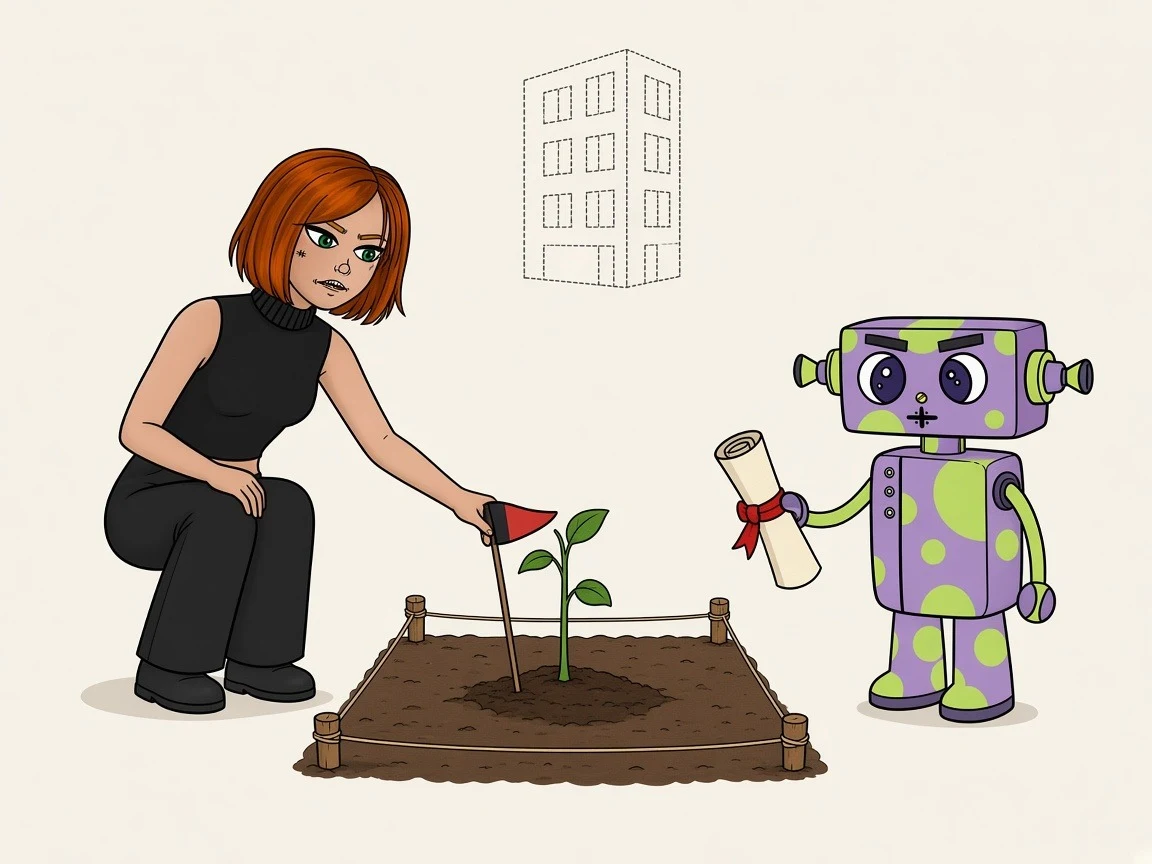
Before you build, you dig. For that you need an excavation permit from City Hall. And sometimes the ground has a surprise for you: gold, or something from the old world.
In short: What you find is yours: keep it, sell it or auction it.
Step 9 of 34
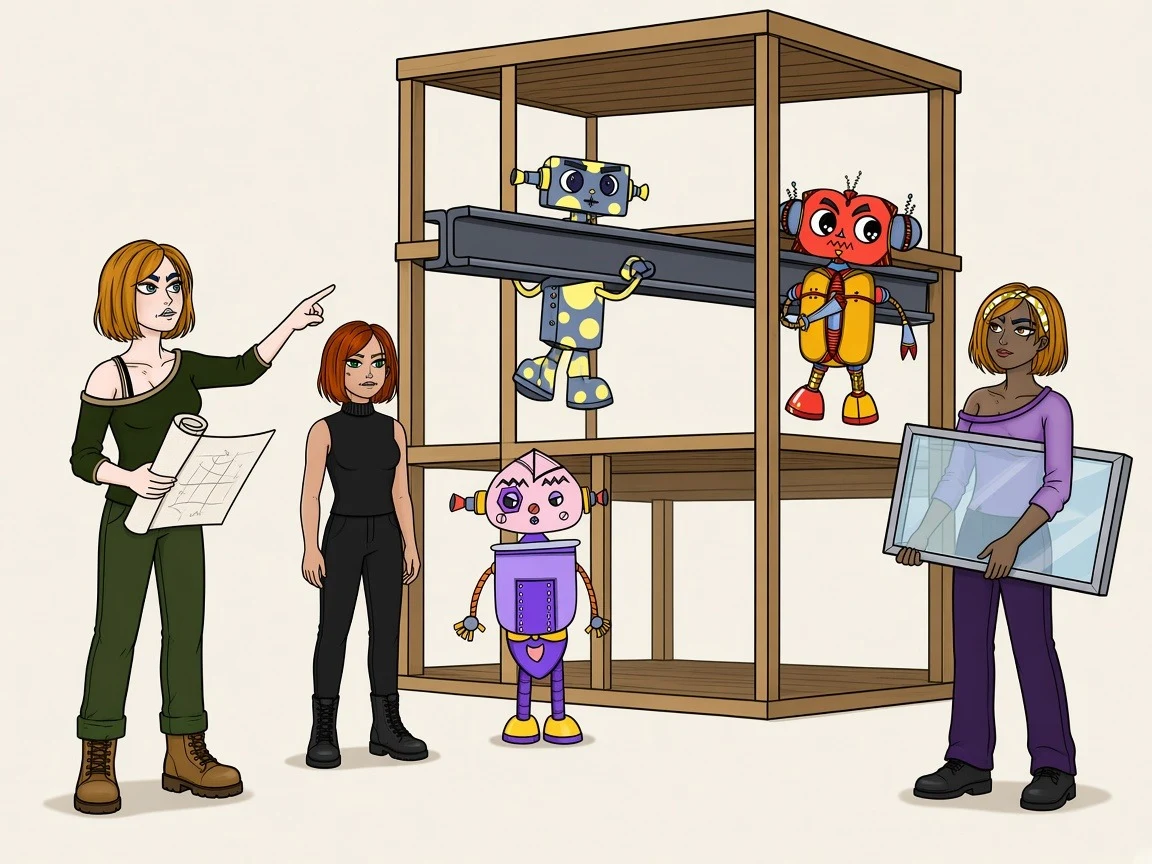
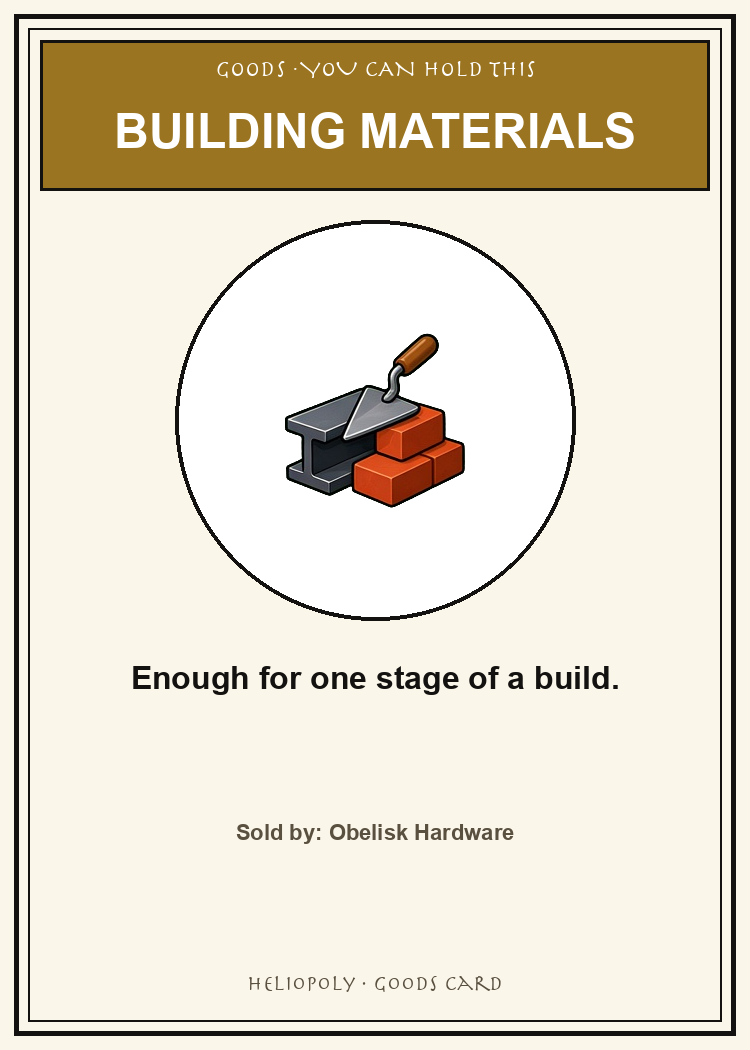
Now you build, floor by floor. Each floor needs a construction permit and building materials: steel beams, timber, glass, wire and sealant. You can do it yourself, or pay Dig Dynasty and Up & Up to do it faster.
In short: A permit card is green: winning one is good news.
Step 10 of 34 · in depth
A lot is ground plus AIR RIGHTS — twenty-five floors of sky on ground that would carry a hundred. Five are yours to build on at once; the rest release over twenty days. The gap between twenty-five and a hundred is the market.
AIR RIGHTS ARE NOT MADE OUT OF THIN AIR. A pioneer who wants to build higher buys them from another pioneer — one who bought a lot and never built up, because a ground business is all they need. They sell their spare floors on the Marketplace or at the Crypties Auction House.
Going past five floors needs the city's permission: Heliopoly keeps a strict air-rights policy. And sky you hold is sky you pay dues on, built or not — which is why the sky trades as hard as the ground.
Step 11 of 34 · the rules
• Five floors of air rights are available at once; the other twenty release over twenty days.
• Air rights can be sold, bought and transferred alone, on the Marketplace or at Crypties.
• More sky comes only from another pioneer, or from a card: Sammy Buildmore's Upzoning and the Mayor's +5 Air Rights Boost.
• Air rights pay no tax until you build on them; then each floor pays like any other floor.
Step 12 of 34
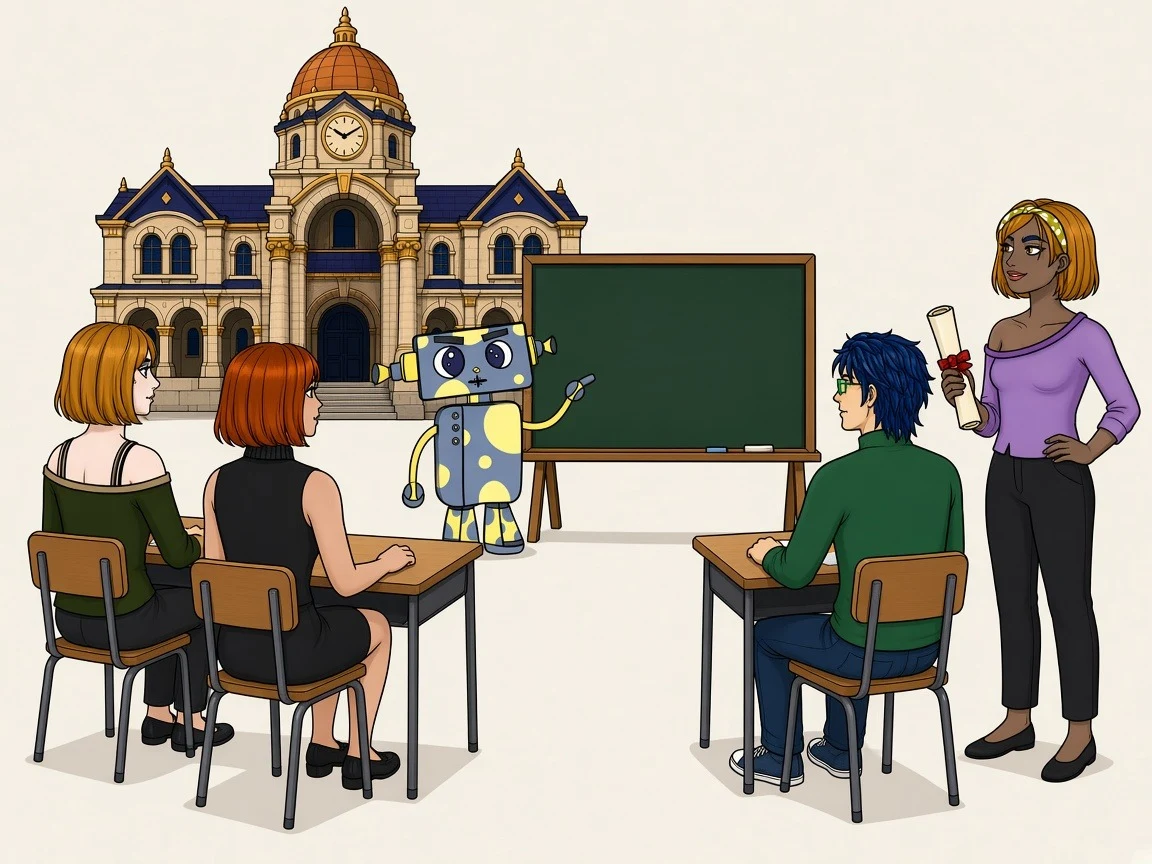
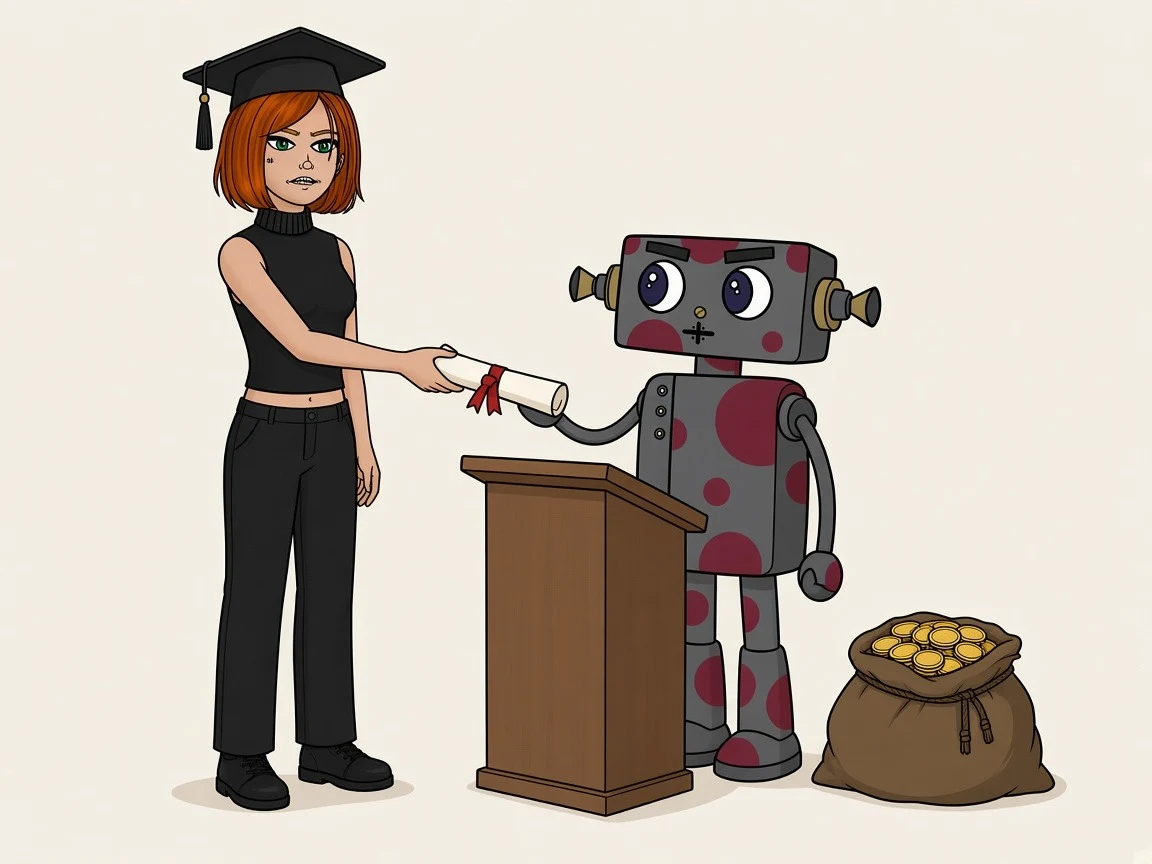
To run a business you must know the trade. The University teaches twenty subjects, from cooking to medicine, and it is free. You pay with Helio moves instead of money: four, eight or twelve, depending on the subject.
In short: A diploma is earned. It can never be bought or sold.
Step 13 of 34 · in depth
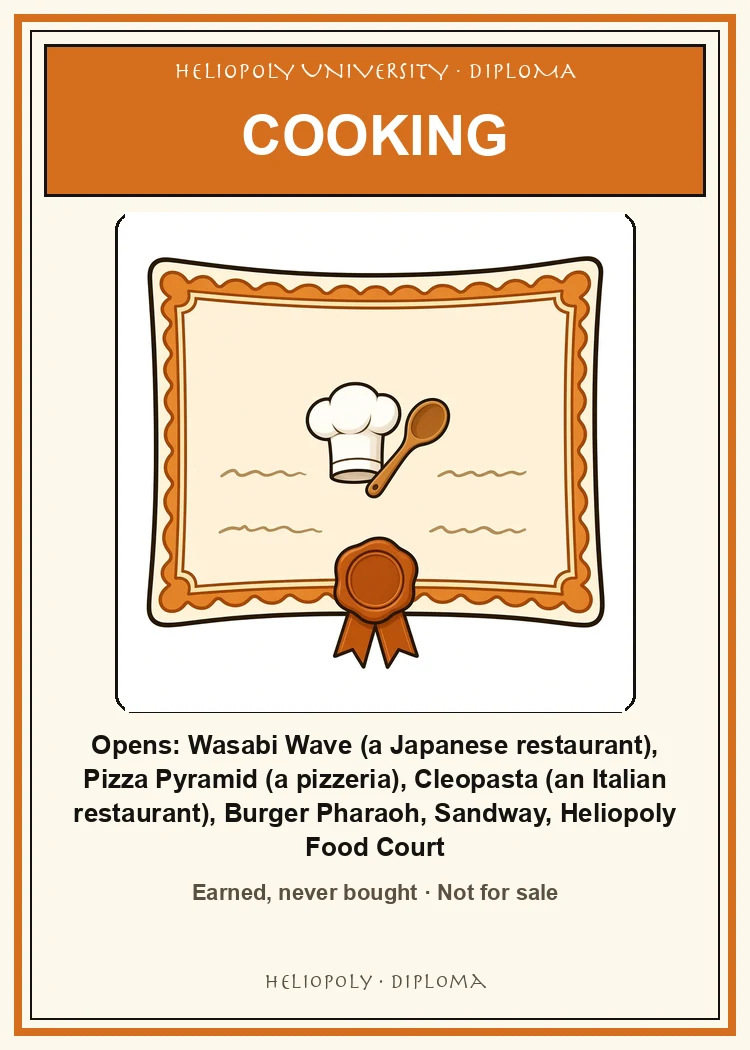
A DIPLOMA IS THE KNOWLEDGE A BUSINESS NEEDS: cooking opens a restaurant, logistics a moving company, accountancy an accounting practice. It is earned by studying and can never be bought or sold.
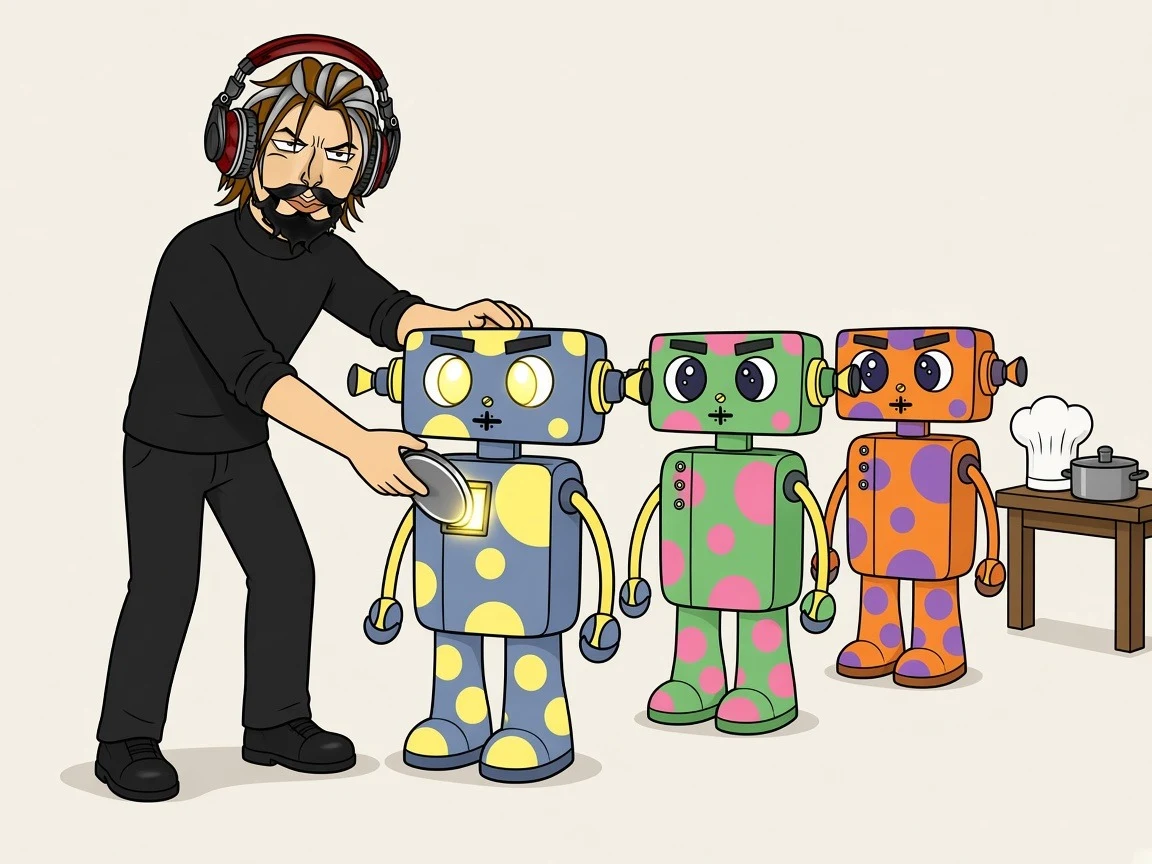
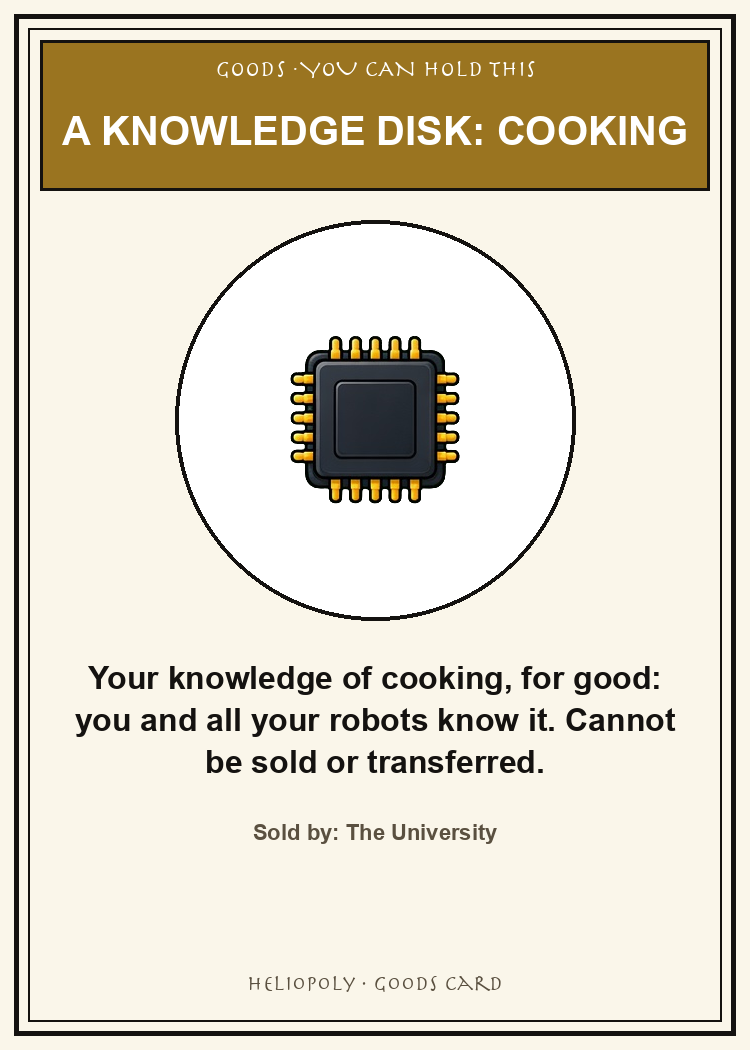
With every diploma comes a knowledge disk. Fed to your robots, it teaches all of them the trade at once, for good. That is the only way a robot learns a trade.
Opening a business uses the diploma up. A second business of the same kind needs only a duplicate, for a fee, not the studies again.
Step 14 of 34 · the rules
• The University is free: study costs 4, 8 or 12 Helio moves, depending on the subject.
• A private college (Scribe School) charges money and takes fewer Helio moves. Same diploma, same disk.
• Diplomas and knowledge disks cannot be sold or transferred. The University keeps the record, so a duplicate can always be ordered.
• Robots restock a shop only once they have the stock-management disk.
Step 15 of 34
Every diploma comes with a knowledge disk. Feed it to your robots and they all learn the trade at once. Learn to cook, and every robot you own can cook.
In short: You learn once. Your robots know it for good.
Step 16 of 34
Every business needs a business licence. Some need more. A business that welcomes people inside needs a fire safety certificate, from the city's fire station or from a volunteer one like Blaze Brigade.
In short: Each paper comes from its own office.
Step 17 of 34 · in depth
A CONSTRUCTION PERMIT from the Council lets you add floors to any building or land you already hold. A BUSINESS LICENCE is required to start mining or cultivating, though not to buy a business that is already running.
The University is the only place a diploma comes from, and nothing else gives you one. HALT — the Heliopoly Authority for Licensing and Transit — will test you for a ship licence. IT WILL NOT TEACH YOU.
Which is the same shape as the hospital and the clinic: a thing the city does once, badly served, and a trade waiting beside it. A flight school does best standing directly outside HALT's door.
Step 18 of 34 · the rules
• Nancy Ordinance's card halves the time and the cost of any city permit.
• Neither the university nor HALT accepts money instead of passing.
• Permits and licences are transferable, and worth most to whoever is in a hurry.
• A diploma in accountancy lets you keep your own books for nothing.
Step 19 of 34
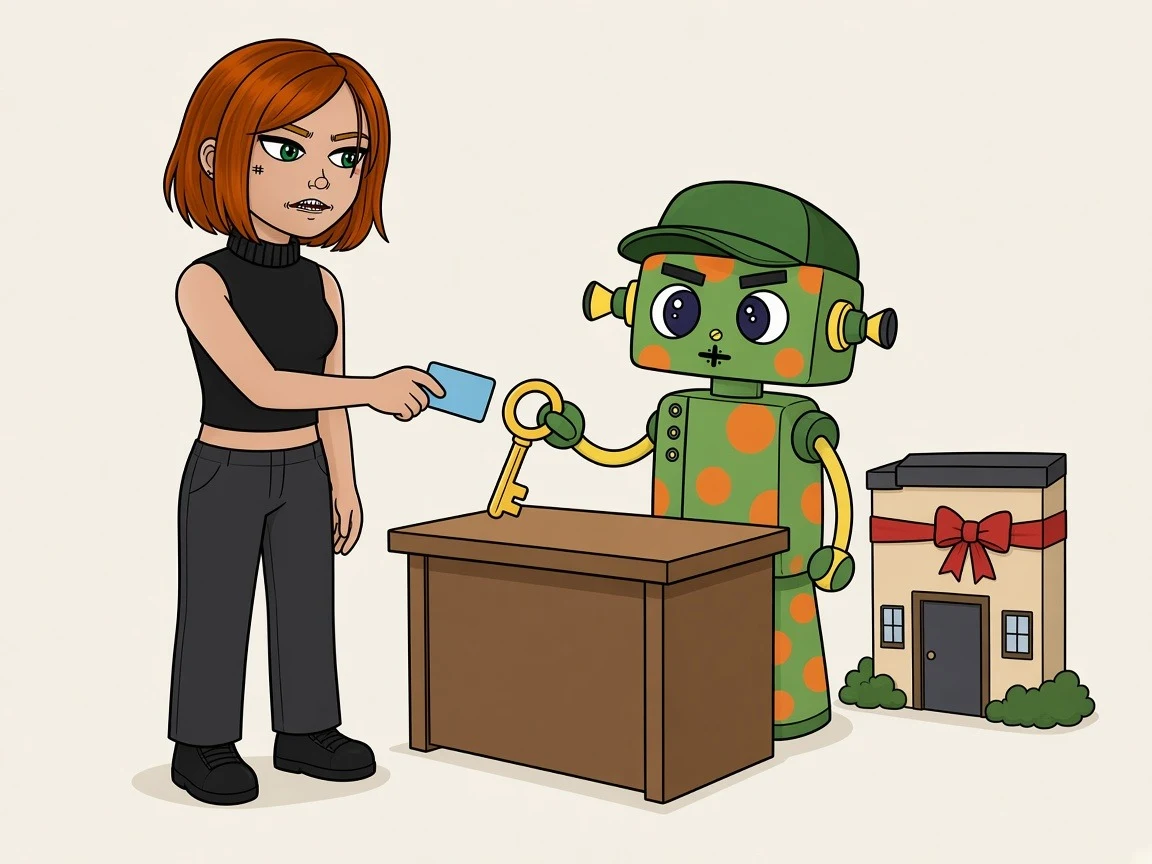
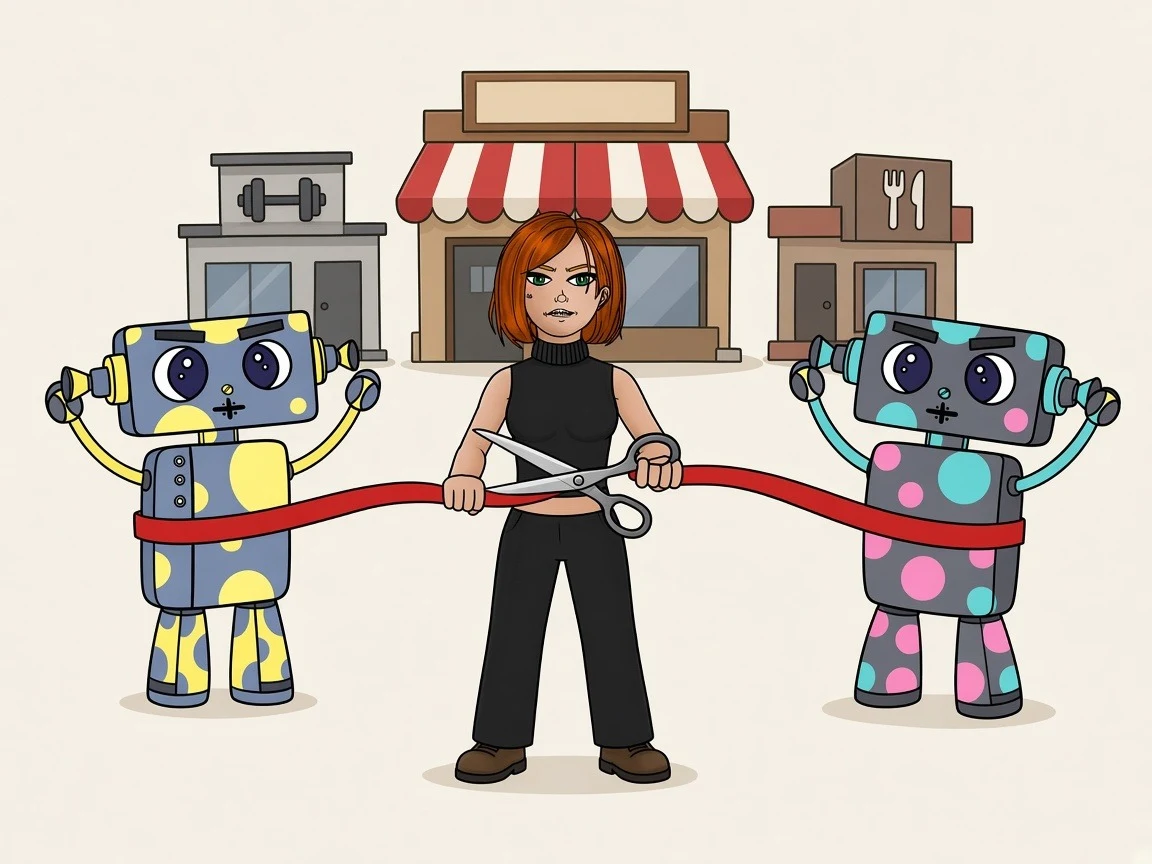
Now put it all together. A lot, a building, a business licence, the diploma for the trade, and the papers it asks for. File them at City Hall, and your doors are open.
In short: Licence, diploma, papers. Then you are in business.
Step 20 of 34
Restaurants, hotels, a pharmacy, a hardware store, a gold dealer, a flying school, a moving company and many more. Each one offers something pioneers are sent for. Is something missing in your part of town? That is your chance: here, anything can become a franchise.
In short: See what your corner lacks. Then open it.
Step 21 of 34
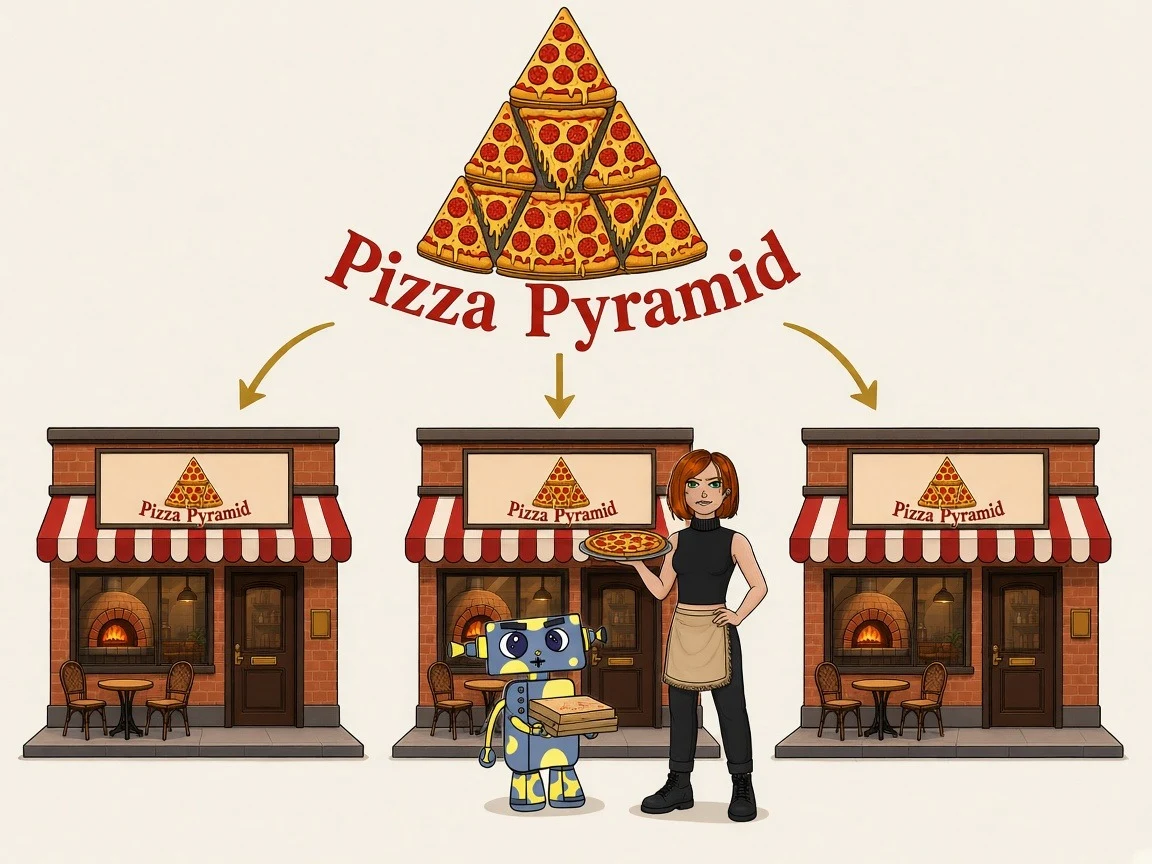
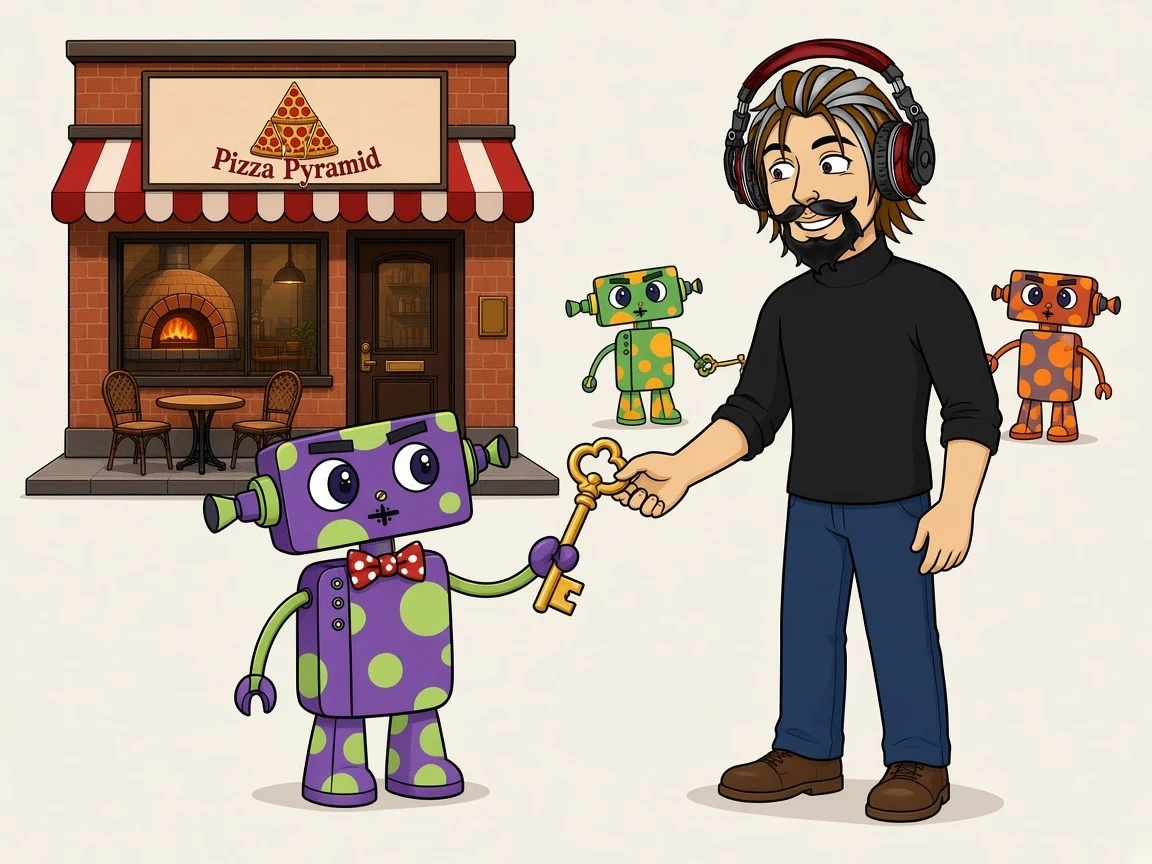
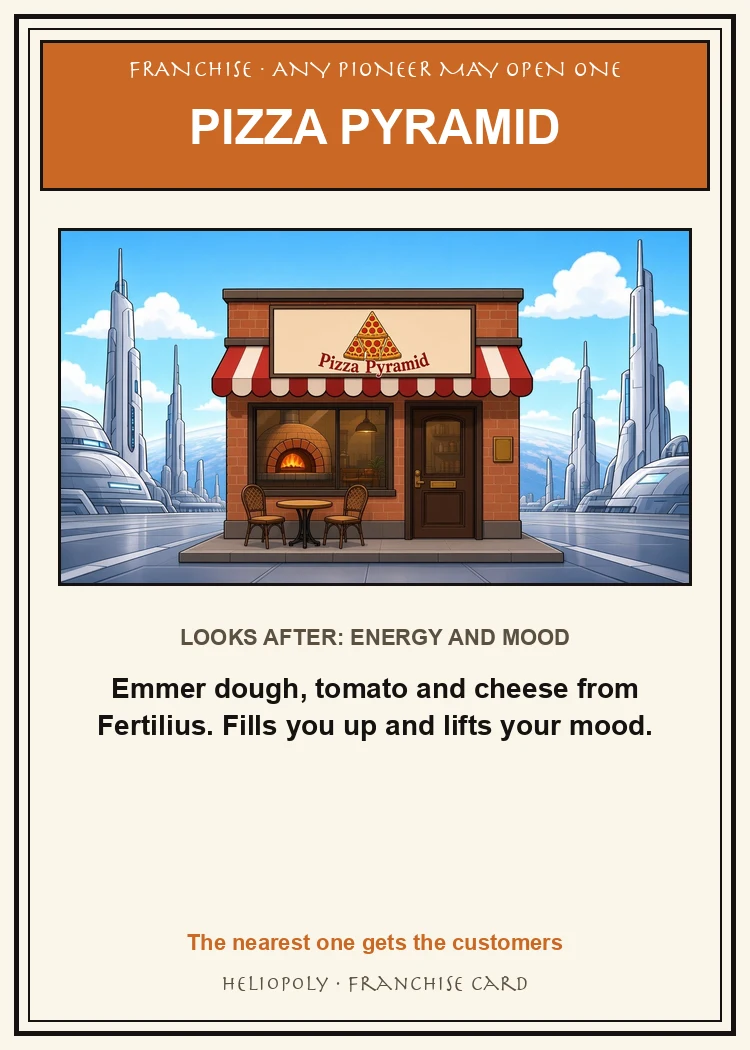
You do not have to invent a shop. Pizza Pyramid already has its sign, its recipes and its fans. Open a Pizza Pyramid on your corner, and customers already know it. You run it, and you keep what it takes. Grown-ups call this a franchise.
In short: Many Pizza Pyramids, many owners, one famous name.
Step 22 of 34 · in depth
A franchise is a business under a known brand: Pizza Pyramid, Cleopasta, Wasabi Wave, Obelisk Hardware, Gold Rush, Mummy Movers, Mummy's Attic and more. You run it and you keep its takings.
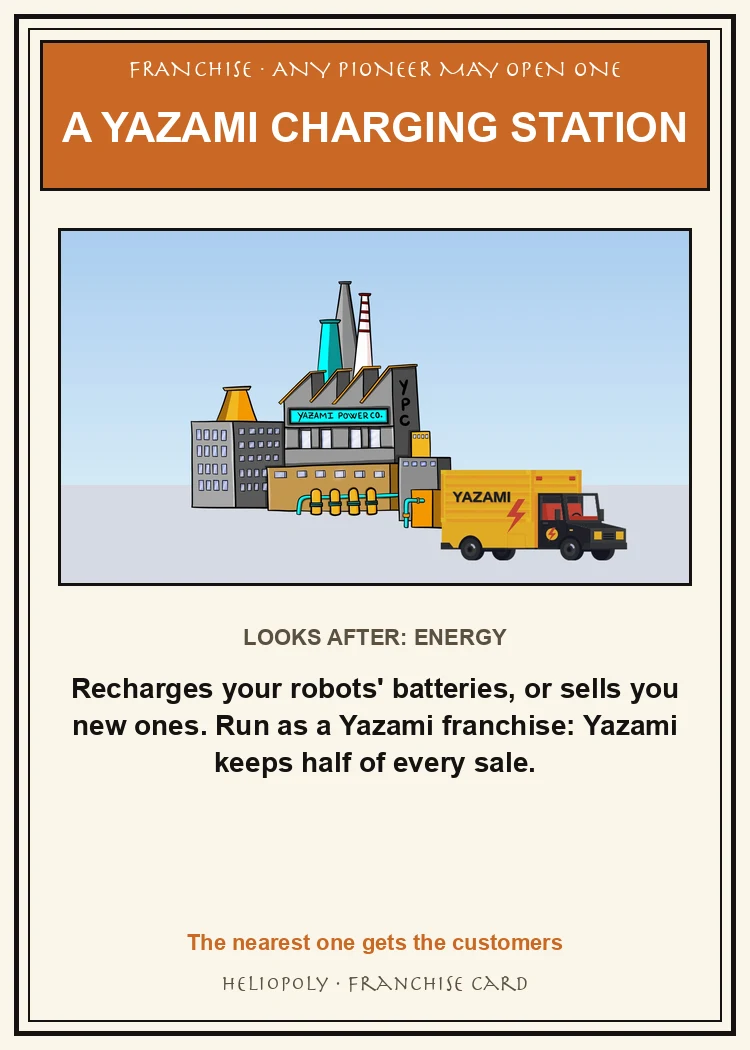
Some are run together with a big company: a Yazami charging station, a Fertilius Seeds shop. The company supplies the goods and you share the takings half and half.
ANYTHING CAN BECOME A FRANCHISE. If your part of town lacks something, that is your chance.
Step 23 of 34 · the rules
• To open any business: a business licence, the diploma for the trade, and the papers it asks for, filed at City Hall.
• Yazami and Fertilius franchises split takings 50/50 with the company.
• No two pharmacies, Yazami charging stations, Gold Rush dealers or Mummy's Attic facilities may open within three lots of each other. Every other business may cluster.
• Nobody's ownership is capped: an overpriced cluster simply stops being sent customers.
Step 24 of 34
Some franchises are run together with a big company. Open a Yazami charging station and Yazami supplies the batteries. Open a Fertilius Seeds shop and Fertilius sends the seeds. You and the company share what it takes, half and half.
In short: Less to set up. You share the takings.
Step 25 of 34
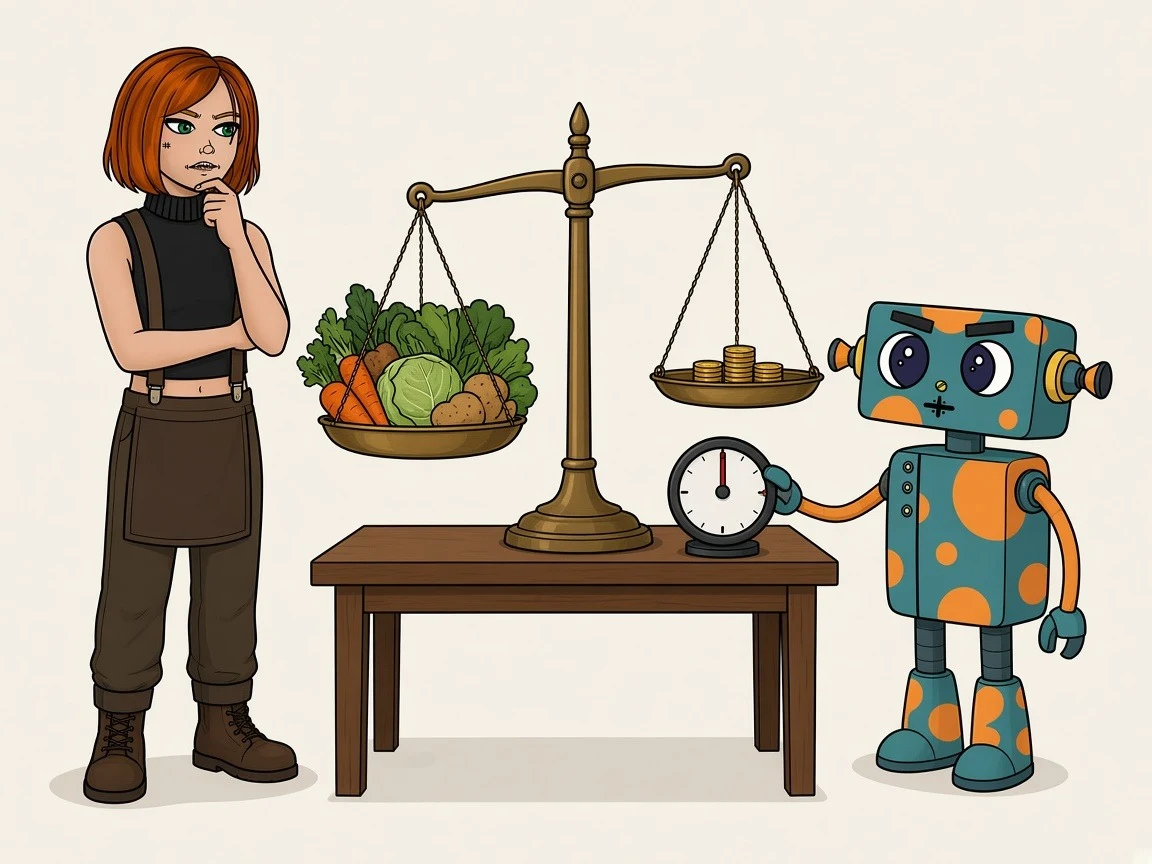
A shop buys its goods and sells them for more. Its stock always costs less than half of what it sells for, so a shop that has customers earns. Your robot reorders, and the goods arrive when they are paid for.
In short: Full shelves, open doors, steady earnings.
Step 26 of 34 · in depth
The robots' output keeps goods on the shelves; THE PRICE MOVES WITH WHAT PIONEERS PRODUCE against what the city wants. Few farmers means dear food, never no food.
An automatic market maker suggests a fair price for every shop, with a ceiling buyers will not go above. An owner may set their own price instead, for their own shops only, and gives up that protection. In times of plenty anyone may sell below the suggested price.
Step 27 of 34 · the rules
• A business's stock always costs less than half of what it sells for. No price starts below its cost.
• Food put up for sale goes bad if it is not sold within three days.
• A pioneer may keep what they buy out of sight; the market sees only what is put up for sale.
• The Heliopoly Sheet is the one place prices are set.
Step 28 of 34
You do not stand behind the counter. Your robots serve the customers and reorder the stock. They run on Yazami batteries, which are recharged at a charging station.
In short: Charged robots keep earning while you are away.
Step 29 of 34 · in depth
Food, fuel, fitness, gold, transport, a pharmacy, a night club, a zoo, four kinds of lodging. Each one moves something a pioneer carries: energy, mood, health, assets.
A FRANCHISE is the same business in several places and somebody owns the name. You go to whichever branch is nearest, which costs less energy than crossing the city — the quiet reason chains shape how everybody moves.
A franchise name is a thing you buy, NOT A MONOPOLY ON THE TRADE. Anyone may open a clinic, a food place, a gym or a shop under their own name and their own sign — and nothing stops somebody opening the same thing next door to annoy you.
Step 30 of 34 · the rules
• A franchise name is bought, not a monopoly on the trade: anyone may open the same thing next door.
• Stock in a master franchise pays out of every till in the chain, in proportion to what you hold.
Step 31 of 34
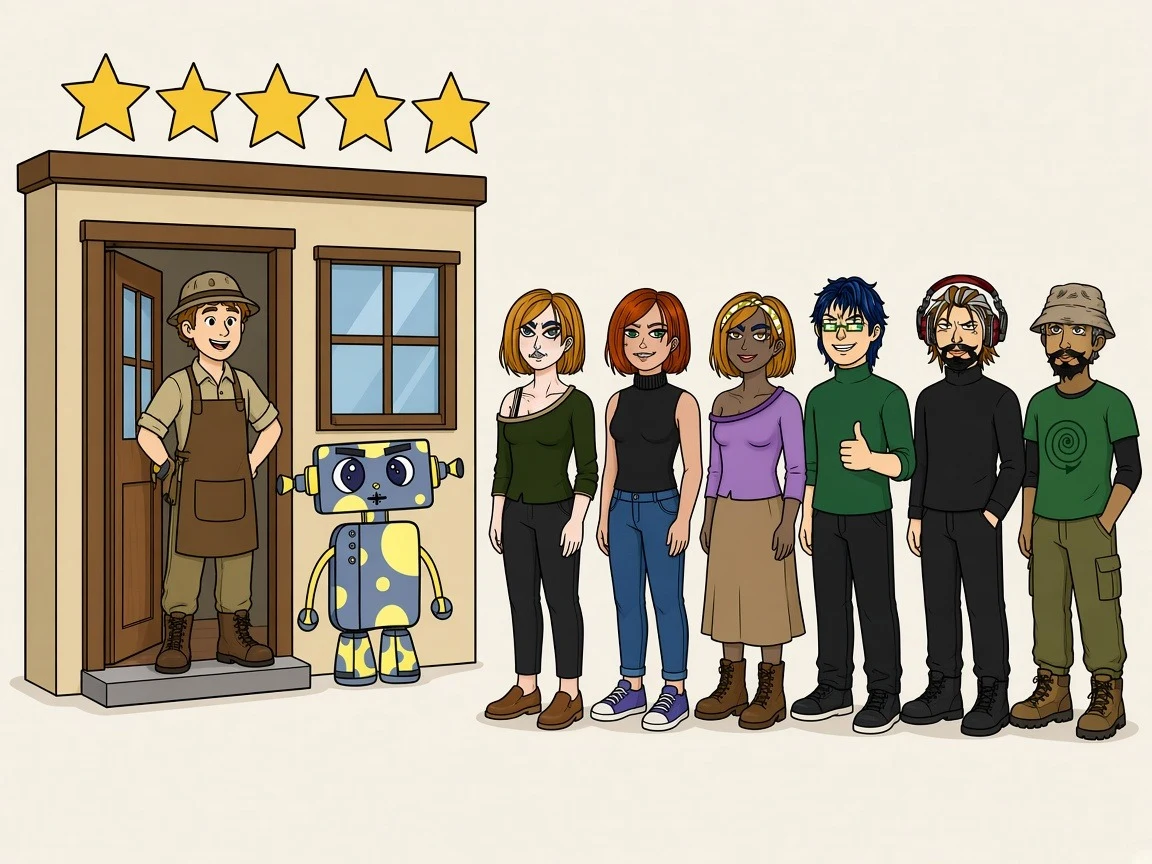
The city remembers how you play. A good name is worth more than gold here.
Step 32 of 34 · in depth
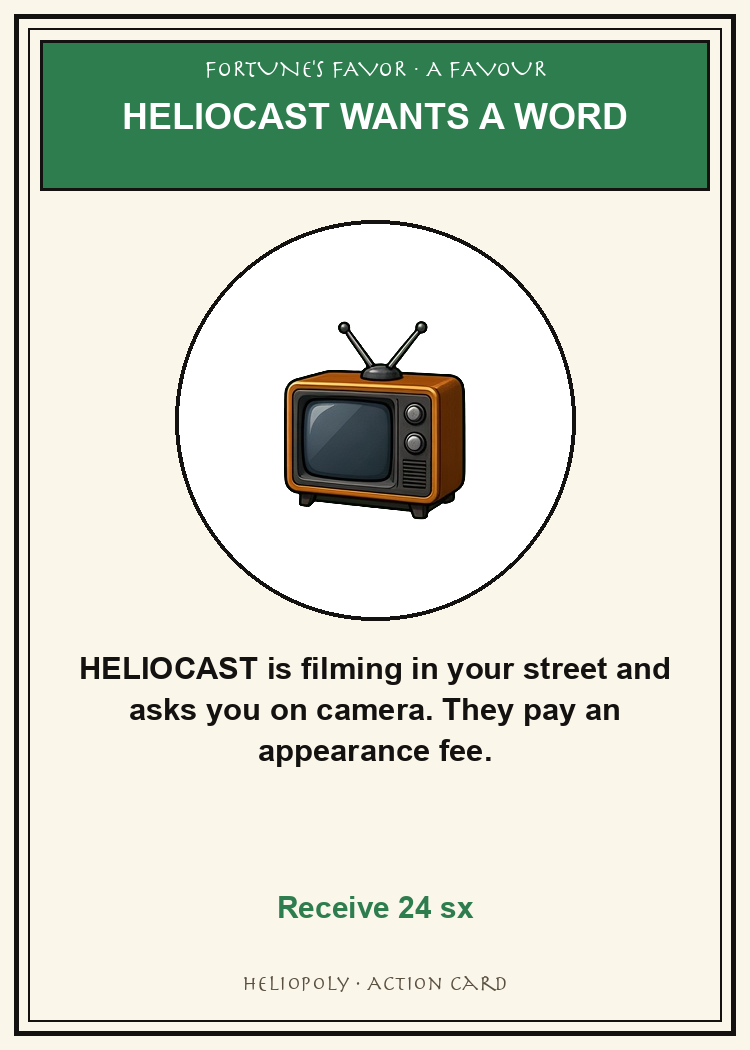
Reputation rises when a pioneer pays bills and tax on time, keeps the shelves stocked, keeps IPO shares for the agreed time and appears on HELIOCAST. It falls with missed payments, time in jail and raids they send.
Step 33 of 34 · the rules
• When two shops are equally near, a card sends the pioneer to the one whose owner has the better reputation.
• A high reputation counts in IPO priority and towards the Settler credit card.
Step 34 of 34
That is everything you need to open your doors. Pick your corner well: the nearest shop gets the customer.
The Heliopoly newsletter
HVC is the city’s own channel. The newsletter brings it to you while you are away: what the Council just did, which official holds which card, what is running at Crypties, whose corner sold — and what is new to play. Joining makes you a Pioneer, with one account across every Gravitrek world. Leave whenever you like.